
The psychological aspects of employee burnout and stress management explain how prolonged work pressure affects thinking, emotions, behavior, and mental health. This topic matters today because burnout is rising across workplaces worldwide. Psychology-based stress management focuses on cognitive, emotional, and behavioral regulation to prevent burnout and support long-term well-being.
Psychological Aspects of Employee Burnout and Stress Management
Employee burnout is no longer a rare condition limited to high-pressure jobs. It is a psychological reality affecting people across industries, cultures, and income levels. According to global workplace surveys, a large percentage of employees report feeling mentally exhausted, emotionally drained, and disconnected from their work. This is not a motivation problem. It is a psychology problem.
Burnout develops when stress stops being temporary and becomes constant. The human mind is designed to handle pressure in short bursts. It is not built to stay in survival mode for months or years. When work stress remains unresolved, it begins to reshape thoughts, emotions, behavior, and even identity. Stress management, therefore, is not about quick relaxation tricks. It is about understanding how the mind reacts to pressure and how to guide it back to balance.
Employee Burnout and Stress Management Key Facts
| Aspect | Clear Explanation |
|---|---|
| Definition | Burnout is a psychological response to long-term, unmanaged work stress |
| Core symptoms | Emotional exhaustion, mental detachment, reduced performance |
| Psychological causes | Lack of control, chronic pressure, low support, cognitive overload |
| Types of stress | Acute, episodic acute, and chronic stress |
| Key mental effects | Anxiety, low mood, poor focus, reduced motivation |
| Stress management methods | Cognitive reframing, emotional regulation, behavioral change |
| Common models used | ABC approach, 4 A’s, 5 C’s, 3 R’s, 5 R’s |
| Psychological treatments | CBT, mindfulness-based therapy, counseling |
| Prevention focus | Awareness, boundaries, recovery, supportive work environments |
| Current relevance | Rising burnout rates in modern, high-demand workplaces |
This article explains the psychological aspects of employee burnout and stress management in clear, practical language. It focuses on how burnout forms, how stress works in the mind, and what psychology-backed methods actually help people recover and protect their mental health.
Understanding Employee Burnout in Psychology
From a psychological perspective, burnout is a response to prolonged emotional and cognitive overload. It happens when effort consistently outweighs recovery. People give energy, attention, and emotional labor without enough rest, control, or reward in return.
Burnout is not sudden. It builds slowly. At first, a person may feel tired but motivated. Then motivation fades, and effort begins to feel heavy. Eventually, even simple tasks feel overwhelming. This progression reflects deeper changes in how the brain processes stress, motivation, and meaning.
Psychology identifies burnout as a combination of emotional exhaustion, mental distancing from work, and reduced sense of competence. These changes are not personality flaws. They are adaptive responses that become harmful when stress never turns off.
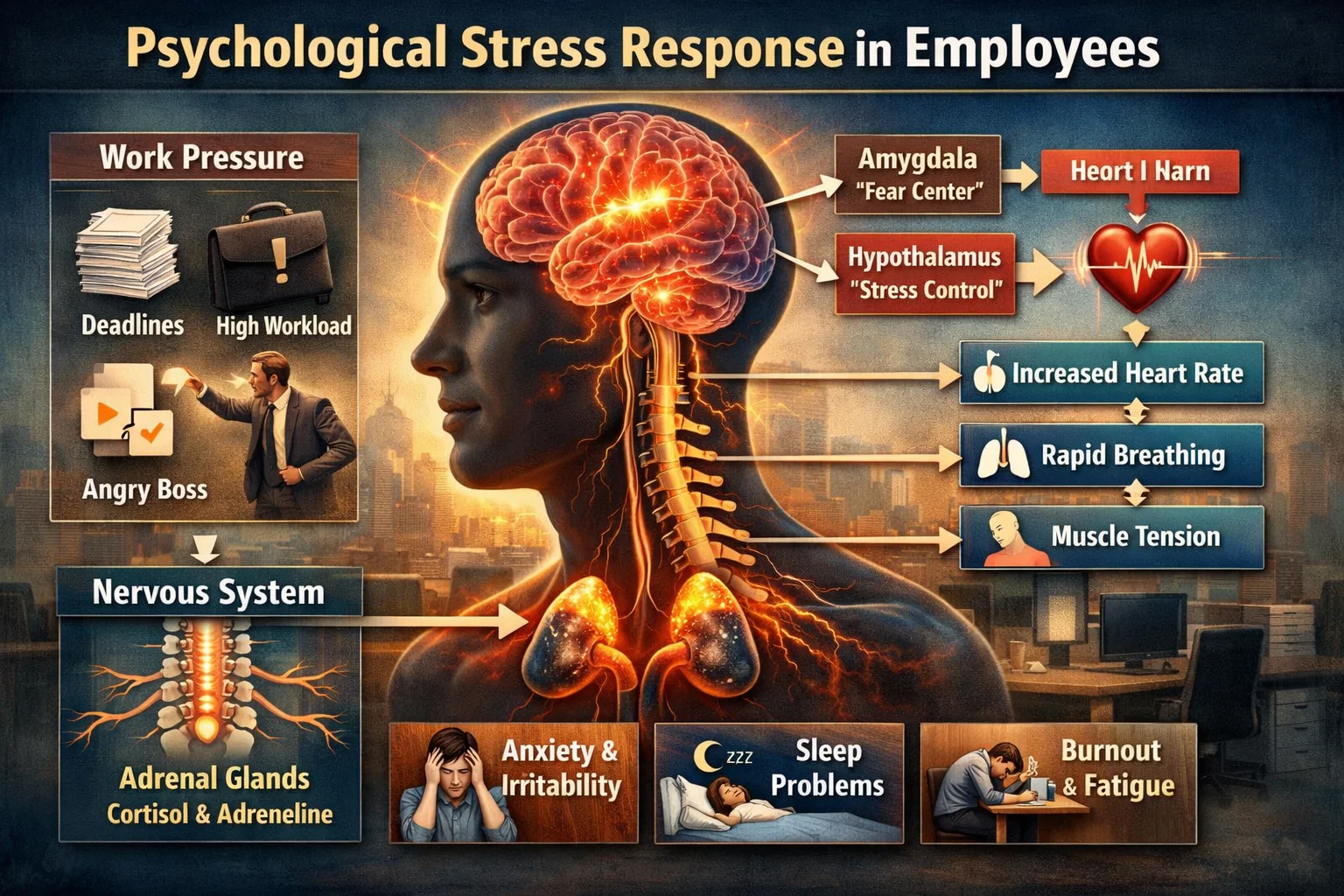
The Psychological Effects of Burnout
The psychological effects of burnout reach far beyond feeling tired. Burnout affects how people think, feel, and relate to others.
Common psychological effects include chronic anxiety, low mood, irritability, and emotional numbness. Many people report feeling detached from their work, colleagues, or even their own goals. Concentration suffers. Memory becomes unreliable. Decision-making feels harder than it should.
Burnout also distorts self-perception. People begin to doubt their abilities, even if they were once confident and capable. Small mistakes feel like personal failures. Praise no longer feels meaningful. This erosion of self-worth is one of the most damaging aspects of burnout.
Over time, burnout increases the risk of clinical depression, anxiety disorders, and substance misuse. The mind stays in a defensive state, constantly scanning for demands and threats. Without intervention, this pattern can persist even after job conditions improve.
The Three Types of Stress in Psychology
Psychology recognizes three main types of stress, all of which play a role in burnout.
Acute stress is short-term. It comes from immediate challenges like deadlines, presentations, or conflicts. In small doses, acute stress can sharpen focus and performance.
Episodic acute stress occurs when acute stress happens frequently. People who constantly rush, worry, or take on too much often live in this state. Their nervous system rarely settles.
Chronic stress is the most dangerous. It develops when stressors remain unresolved for long periods. Low control, ongoing pressure, job insecurity, or emotional strain at work can all create chronic stress. Burnout is closely linked to this type of stress.
Understanding these types matters because stress management strategies must match the kind of stress a person is experiencing.
Psychological Aspects of Stress in the Workplace
Stress is not only about workload. Two people can face the same demands and experience very different stress levels. The difference lies in psychological processing.
The mind constantly interprets situations. It asks: Is this controllable? Is it threatening? Do I have the resources to cope? These interpretations shape the stress response more than the situation itself.
Workplace stress intensifies when people feel trapped, undervalued, or unable to influence outcomes. Lack of clarity, unfair treatment, and emotional labor also strain psychological resources. Over time, these factors reshape how employees think about work and themselves.
Core Psychological Factors Behind Work Stress
Several psychological aspects play a central role in how stress develops at work.
Perceived lack of control is one of the strongest predictors of burnout. When employees feel they have no say in decisions, schedules, or workload, stress rises sharply.
Uncertainty is another key factor. Unclear expectations, constant changes, or fear of job loss keep the mind in a state of vigilance.
Threats to self-esteem also matter. Environments that emphasize constant evaluation, comparison, or criticism activate deep psychological stress responses.
Meaning and fairness are equally important. When effort feels pointless or unfairly rewarded, motivation collapses. The mind disengages as a form of self-protection.
Five Psychological Factors That Increase Burnout Risk
Several psychological factors consistently increase the risk of burnout.
Perfectionism pushes people to set unrealistically high standards and ignore limits. This creates constant internal pressure.
Role conflict occurs when job demands clash or remain unclear. The mind struggles to prioritize, leading to ongoing tension.
Emotional labor involves managing feelings to meet job expectations. This hidden effort drains emotional energy.
Low social support leaves individuals isolated. Humans regulate stress better when they feel understood and supported.
Maladaptive coping styles, such as avoidance or excessive self-criticism, amplify stress instead of resolving it.
These factors often interact, creating a cycle that accelerates burnout.
Physiological and Psychological Stress Indicators
Stress affects both mind and body. The two systems are deeply connected. Psychological stress triggers physical reactions, and physical strain feeds back into mental fatigue.
Recognizing early indicators helps prevent burnout from becoming severe.
Five Physiological Indicators of Stress
Common physiological indicators include persistent fatigue that does not improve with rest. Muscle tension, especially in the neck and shoulders, is another sign.
Sleep disturbances often appear early. People may struggle to fall asleep, wake frequently, or feel unrefreshed.
Changes in heart rate or blood pressure reflect ongoing nervous system activation.
Digestive issues, headaches, and frequent minor illnesses also signal prolonged stress.
These physical symptoms often appear alongside psychological exhaustion.
The 42 Percent Rule for Burnout
The so-called 42 percent rule refers to research suggesting that burnout risk rises sharply when recovery time consistently falls far below effort. While the exact number varies, the principle is clear.
When people spend most of their energy on work demands and very little on rest, autonomy, or enjoyment, burnout becomes likely. The mind needs recovery periods to reset stress responses. Without them, even manageable workloads become overwhelming.
The value of this rule lies in highlighting imbalance, not precise measurement.
Psychological Methods of Stress Management
Effective stress management focuses on changing how stress is processed, not just reducing pressure. Psychology offers structured methods that help people regain control over their stress response.
The ABC Approach for Managing Stress
The ABC approach comes from cognitive psychology. It explains how beliefs shape stress.
A stands for the activating event. This is the situation, such as a deadline or conflict.
B stands for beliefs. These are the thoughts about the event. For example, believing that a mistake means failure.
C stands for consequences. These are the emotional and behavioral outcomes, such as anxiety or avoidance.
Stress management using this model focuses on identifying and adjusting unhelpful beliefs. When beliefs become more balanced, emotional reactions soften.
The Four A’s of Stress Management
The four A’s provide a practical framework.
Avoid means reducing exposure to unnecessary stressors.
Alter involves changing situations when possible, such as negotiating workload or boundaries.
Adapt focuses on adjusting thoughts, expectations, or responses.
Accept applies when situations cannot be changed. Acceptance reduces internal resistance and emotional strain.
This model helps people respond flexibly instead of reacting automatically.
Structured Stress Management Models Explained
Psychology offers several structured models that organize stress management strategies into clear categories. These models work best when applied consistently, not occasionally.
The Five C’s of Stress Management
The five C’s include control, commitment, challenge, confidence, and connection.
Control refers to focusing on what can be influenced, even in limited ways.
Commitment involves staying engaged with values and goals rather than withdrawing emotionally.
Challenge reframes stressors as opportunities for growth instead of threats.
Confidence builds through realistic self-talk and recognition of skills.
Connection emphasizes social support and healthy relationships.
Together, these elements strengthen psychological resilience.
The Five R’s and Four R’s of Stress Management
Different frameworks describe similar recovery principles using R-based models.
Common elements include rest, relaxation, reframing, resilience, and responsibility.
Rest restores physical and mental energy. Relaxation calms the nervous system.
Reframing changes how situations are interpreted. Resilience develops coping capacity over time.
Responsibility emphasizes proactive self-care instead of self-neglect.
The four R’s often focus on recognize, reduce, restore, and rebuild, highlighting awareness and recovery.
The Five D’s of Stress
The five D’s are practical for task-related stress.
Delay involves pausing before reacting.
Delegate means sharing workload appropriately.
Do focuses on completing high-priority tasks.
Delete removes unnecessary obligations.
Decide encourages clear choices instead of constant indecision.
This model reduces cognitive overload.
Psychological Treatment and Recovery From Burnout
When burnout becomes severe, self-help strategies may not be enough. Psychological treatment provides structured support and evidence-based tools.
The Three R’s of Burnout Recovery
The three R’s of burnout recovery are recognize, recover, and rebuild.
Recognize involves acknowledging burnout without shame. Many people delay recovery because they minimize their condition.
Recover focuses on rest, boundaries, and nervous system regulation. This phase often requires reducing workload.
Rebuild addresses long-term changes in habits, beliefs, and work patterns to prevent relapse.
Recovery is not linear. It requires patience.
Psychological Treatment for Burnout
Cognitive behavioral therapy helps identify and change thought patterns that fuel stress and exhaustion.
Stress inoculation training builds coping skills through gradual exposure and skill development.
Mindfulness-based interventions improve emotional regulation and present-moment awareness.
Workplace counseling addresses role stress, boundaries, and communication.
Treatment works best when combined with organizational changes rather than placing responsibility solely on individuals.
Preventing Burnout Through Psychological Awareness
Prevention begins with awareness. Employees who understand their stress signals can intervene early.
Emotional intelligence helps people recognize emotions before they escalate. Boundary-setting protects recovery time. Realistic goal-setting reduces chronic pressure.
Regular reflection allows adjustment before burnout develops. Prevention is an ongoing psychological practice, not a one-time solution.
Why Stress Management Is a Shared Responsibility
Burnout is not just an individual issue. Work environments shape stress responses.
Organizations influence workload, autonomy, fairness, and support. Leaders affect psychological safety and clarity. Individuals manage boundaries, beliefs, and self-care.
Effective stress management emerges when responsibility is shared. When workplaces acknowledge psychological limits, both performance and well-being improve.
Final Reflection
Employee burnout is a signal, not a failure. It reflects unmet psychological needs for balance, meaning, and recovery. Stress management rooted in psychology offers tools to understand these needs and respond with care and clarity.
By addressing both internal processes and external conditions, individuals and organizations can create healthier, more sustainable ways of working.
Frequently Asked Questions
What are the psychological effects of burnout?
Burnout affects thinking, emotions, and behavior. Common effects include emotional exhaustion, anxiety, low mood, irritability, poor concentration, memory problems, and loss of motivation. Over time, burnout can reduce self-confidence and increase the risk of depression and anxiety disorders if left unaddressed.
What are the psychological aspects of stress?
The psychological aspects of stress include perception of threat, sense of control, cognitive appraisal, emotional regulation, and coping style. Stress increases when people feel overwhelmed, powerless, uncertain, or unfairly treated, even if workload is not extreme.
What are the three types of stress in psychology?
Psychology identifies three main types of stress:
- Acute stress: short-term pressure from immediate demands
- Episodic acute stress: frequent episodes of acute stress
- Chronic stress: long-lasting stress from ongoing problems
Burnout is most closely linked to chronic stress.
What are the 5 psychological factors that contribute to burnout?
Five major psychological factors include:
- Perceived lack of control
- Perfectionism and unrealistic standards
- Role conflict or unclear expectations
- Emotional labor without recovery
- Low social or emotional support
These factors gradually drain mental and emotional energy.
What are 5 physiological indicators of stress?
Common physiological indicators of stress include persistent fatigue, muscle tension, sleep problems, headaches, digestive issues, and frequent minor illnesses. These physical signs often appear alongside psychological exhaustion.
What are the psychological methods of stress management?
Psychological stress management methods focus on changing thoughts, emotions, and behaviors. These include cognitive restructuring, emotional regulation, problem-solving skills, mindfulness practices, boundary setting, and developing healthier coping patterns.
What is the ABC approach for managing stress?
The ABC approach explains stress as a result of beliefs, not just events:
- A: Activating event
- B: Beliefs about the event
- C: Consequences (emotions and behavior)
Managing stress involves changing unhelpful beliefs to reduce emotional distress.
What are the 4 A’s of stress management?
The 4 A’s are:
- Avoid unnecessary stress
- Alter situations when possible
- Adapt thoughts and expectations
- Accept what cannot be changed
This model helps people respond flexibly instead of reacting emotionally.
What are the 5 C’s of stress management?
The 5 C’s include control, commitment, challenge, confidence, and connection. Together, they strengthen psychological resilience by improving coping skills, emotional stability, and social support.
What are the 5 R’s and 4 R’s of stress management?
Both models focus on recovery and balance. They commonly include rest, relaxation, reframing, resilience, responsibility, recognition, reduction, restoration, and rebuilding. The goal is long-term stress regulation, not short-term relief.
What are the 3 R’s of burnout recovery?
The 3 R’s of burnout recovery are:
- Recognize burnout early
- Recover through rest and reduced stress
- Rebuild healthier work patterns and boundaries
Recovery requires time and psychological adjustment.
What is the psychological treatment for burnout?
Psychological treatment for burnout may include cognitive behavioral therapy, mindfulness-based therapy, stress inoculation training, and workplace counseling. Treatment focuses on changing stress-producing thought patterns, improving coping skills, and restoring emotional balance.

Imran Shahzad, M.Sc. Psychology (BZU, 2012), shares real-world mental health tips and emotional guidance in simple English for everyday South Asian readers. He worked closely with individuals facing grief, emotional loss, and life transitions, translating real-world psychological experiences into practical guidance for everyday readers.