
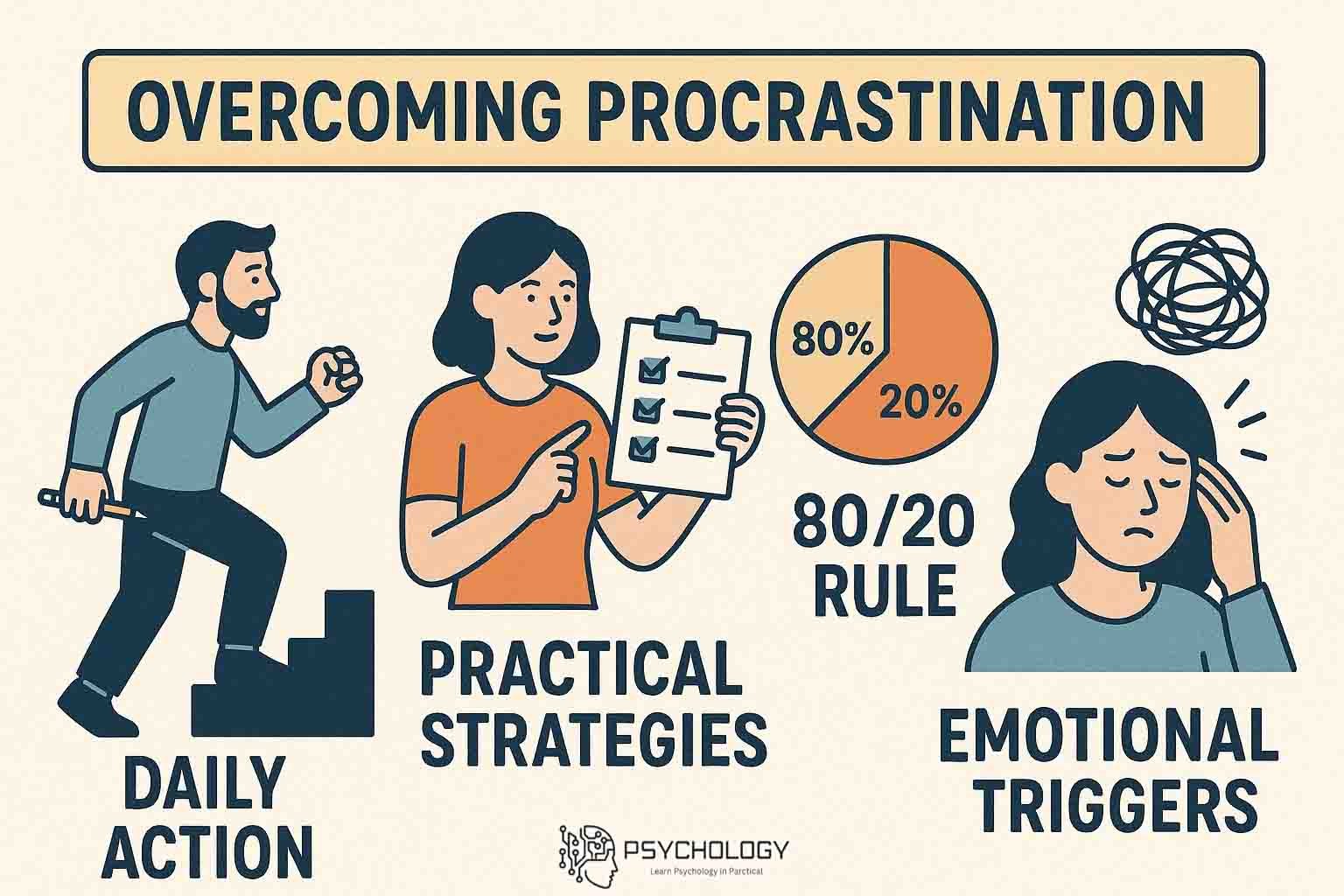
 Procrastination is not just a bad habit, it’s a mental block many of us face, especially when pressure, fear, or confusion creeps in. According to research published in the Journal of Behavioral Medicine, up to 20% of adults struggle with chronic procrastination, and it’s even more common among students and young professionals. In South Asia, where family expectations are high and personal space is limited, this delay in action can easily become a daily struggle.
Let’s understand how to stop procrastinating, not through lectures, but through easy-to-apply techniques that fit real life.
Why We Procrastinate: The Psychology Behind Delay
Procrastination isn’t always about laziness. In psychology, it’s considered an avoidance behavior, when your brain chooses short-term relief over long-term benefit. It can happen for several reasons:
Fear of failure: “What if I mess up?”
Perfectionism: “It’s not ready yet.”
Emotional overload: “I’m too tired or stressed.”
Lack of clarity: “I don’t know where to start.”
In Pakistani or Indian families, another factor plays a role: constant comparison. Parents often say things like, “Your cousin already got a job,” or “Look at your brother, he studies on time.” These statements, though well-meant, can actually freeze motivation.
Understanding this emotional layer is the first step toward regaining control.
The 80/20 Rule for Beating Procrastination
Here’s a powerful idea from business and productivity science: the Pareto Principle, or the 80/20 Rule. It means:
80% of your results come from just 20% of your actions.
Let’s break it down with real examples:
If you’re studying, just 2–3 key chapters may hold most of the exam weight.
In your job, one major project may bring you most recognition.
By identifying and focusing on that most important 20%, you can:
Avoid overwhelm
Feel productive early
Create momentum
💡 Tip: At the start of your day, ask: What ONE thing, if I do it, will make everything else easier?
This small shift can stop the urge to delay and give your brain a clear path forward.
The “70% is Good Enough” Rule to Overcome Perfection Paralysis
Many people delay because they wait for perfection. Psychologists call this “perfection paralysis.” You want the perfect timing, mood, setup, energy, so you never begin.
Here’s a truth bomb:
Starting at 70% effort is far better than waiting for 100% readiness.
Think of a college student:
Instead of spending three days “planning the perfect notes,” just start rough writing with 70% clarity.
Instead of waiting for silence in a noisy home, study with what’s manageable.
This rule works especially well in South Asian homes, where ideal conditions rarely exist. Use what you have. Keep it moving. Done is better than perfect.
Practical Strategies to Stop Procrastination
Now let’s get real. What actually works in your everyday life?
Break Tasks into Micro-Steps
Big task: “Study for psychology exam.”
Micro-step: “Review just 2 pages from Chapter 1.”
Why it works: Your brain sees small steps as less threatening.
Use the Pomodoro Timer
Work for 25 minutes
Break for 5 minutes
After 4 rounds, rest for 15–30 minutes
This technique creates urgency without pressure and keeps your focus sharp.
Keep a “1 Must-Do” Rule
Every morning, write just one important task on a sticky note. Only that. Complete it first.
Control the Phone
Phone is the #1 distraction. Try this:
Keep it in another room during work.
Use “Focus Mode” or “Airplane Mode” while doing hard tasks.
These little hacks can make a massive difference.
Emotional Triggers and Mental Blocks
Let’s talk emotions. Because procrastination often hides deeper mental stress.
Common emotional blocks:
Guilt over past failure
Shame from comparison
Anxiety about outcomes
Exhaustion from multitasking
Instead of ignoring emotions, acknowledge and name them:
“I’m scared I’ll fail this.”
“I feel overwhelmed by expectations.”
Naming your emotion gives you power over it.
🧠 Quick Reframe Tip: Instead of saying “I have to study”, say “I choose to study to help my future self.”
This switch reduces pressure and boosts emotional clarity.
Motivation vs. Discipline: What Actually Works
Most of us say: “I’ll do it when I feel like it.”
But here’s the truth:
Motivation is like weather, it comes and goes. Discipline is what gets things done.
In psychology, the brain releases dopamine when you achieve even a small task. That means:
Starting the task gives you motivation, not the other way around.
The reward is in progress, not perfection.
📌 Hack: After each task, give yourself a reward:
15 minutes of break
One YouTube video
A cold drink
This trains your brain to see action = reward, which builds consistency over time.
Culturally Aware Tips for South Asian Families
In joint families or crowded homes, space and silence are a luxury. That makes procrastination worse. Here’s what you can do:
Create a Micro-Zone for Focus
Even a small desk or corner can act as a mental boundary for study or work.
Time Blocks with Family Support
Ask your family for just one hour of interruption-free time. Explain what you’re working on and when you’ll be free. Respect builds routines.
Use Audio Cues
White noise apps or soft instrumental music can help block background noise and set a mental mood.
These aren’t perfect fixes, but they create space for productivity even in noisy, busy environments.
When to Seek Help: Signs of Chronic Procrastination
If procrastination becomes your daily default, it may be a sign of something deeper:
Depression: lack of energy, low motivation, hopelessness
Anxiety: fear of failure, catastrophizing outcomes
ADHD or executive dysfunction: difficulty focusing, planning, and starting
Watch for signs like:
Regularly missing deadlines
Avoiding even small tasks
Feeling guilty or stuck most days
In these cases, therapy or mental health support can help. You’re not weak for needing help, you’re smart for seeking it.
🧑⚕️ Many Pakistani cities now have affordable counseling centers. You can even find online sessions in Urdu.
Progress, Not Perfection
Procrastination doesn’t make you a failure. It makes you human. But the key difference is whether you stay stuck, or take one small step forward.
Use the 80/20 rule to focus.
Accept that 70% is enough to begin.
Don’t wait for motivation, build routines instead.
Be kind to your emotions.
Respect your struggle, but don’t let it stop you.
Start where you are. Even writing one sentence, studying one page, or doing one push-up can rebuild your mental muscle.
Your future self will thank you for showing up today.
TL;DR
Procrastination often stems from fear, perfectionism, or emotional overload, not laziness. You can overcome it by using strategies like the 80/20 rule, breaking tasks into micro-steps, and focusing on discipline over motivation. Accepting “70% done” as good enough, managing emotions, and building daily routines can reduce delay. Cultural tips for South Asian homes, along with signs that you might need help, make this guide practical and relatable.

Imran Shahzad, M.Sc. Psychology (BZU, 2012), shares real-world mental health tips and emotional guidance in simple English for everyday South Asian readers. He worked closely with individuals facing grief, emotional loss, and life transitions, translating real-world psychological experiences into practical guidance for everyday readers.