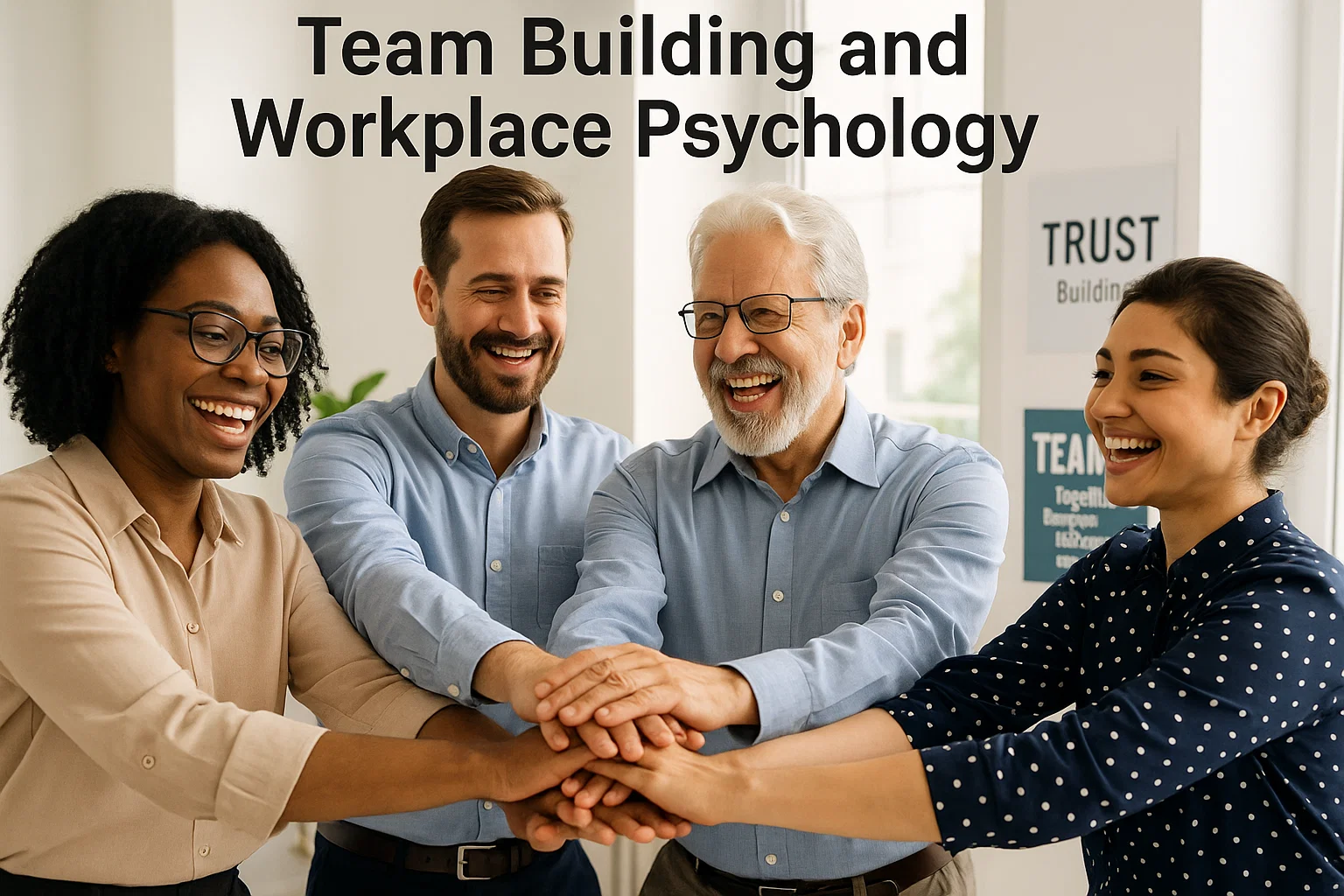
 Every organization dreams of a team that works like a symphony each person confident in their part yet tuned to the same rhythm. But behind every harmonious workplace lies careful psychology. Research from Google’s “Project Aristotle” showed that the strongest teams weren’t those with the most talented individuals but those that shared trust, empathy, and psychological safety.
In real numbers, teams with strong collaboration report 50 percent higher employee satisfaction and up to 40 percent better performance outcomes. The reason is simple: when people feel connected, they care more, communicate better, and create faster.
This article looks at how psychology guides effective team building from understanding human needs to applying tested frameworks such as the 5 C’s and 7 C’s of teamwork. Whether you lead a small startup or a corporate department, these strategies can help you build teams that last.
Understanding the Psychology Behind Team Building
Team building begins in the human mind. Every person wants to belong, to be heard, and to contribute meaningfully. These needs connect directly to Maslow’s Hierarchy of Needs, where belongingness and esteem sit just below self-actualization. When a team satisfies these layers, motivation flourishes naturally.
Another guiding model is Tuckman’s Stages of Group Development Forming, Storming, Norming, Performing.
- In the Forming stage, people test boundaries and seek clarity.
- During Storming, differences appear; the key is resolving them with respect.
- Norming brings shared habits and empathy.
- Finally, Performing signals a team that trusts one another enough to innovate freely.
Psychologically, effective teams cultivate emotional safety the feeling that one can speak without ridicule. That safety unlocks creative problem-solving and honest feedback, which no tool or policy can replace.
The 7 C’s of Effective Team Building
Organizational psychologists often summarize teamwork excellence through the 7 C’s: Communication, Cooperation, Coordination, Commitment, Conflict Management, Consensus, and Contribution.
Each C interacts with core behavioral principles:
- Communication – Transparent dialogue reduces uncertainty. Open talk prevents emotional buildup and builds trust.
- Cooperation – Rooted in reciprocal altruism theory: when people help others, mutual benefit returns.
- Coordination – Aligning timing and roles prevents cognitive overload. Clear systems free mental energy for creativity.
- Commitment – Loyalty grows when individuals feel recognized. Public acknowledgment triggers dopamine release a natural motivator.
- Conflict Management – Healthy disagreement signals engagement, not hostility. Psychological tools such as active listening transform tension into learning.
- Consensus – Shared decision-making satisfies the need for autonomy while ensuring fairness.
- Contribution – When everyone’s strengths are valued, intrinsic motivation replaces external pressure.
These seven pillars create an ecosystem of accountability and belonging two invisible threads tying a team together.
The 5 C’s of Team Building Explained Simply
Some trainers prefer a simpler version known as the 5 C’s Clarity, Collaboration, Communication, Creativity, and Confidence.
- Clarity means everyone understands goals and boundaries. Unclear roles trigger anxiety; clear ones create security.
- Collaboration turns competition into collective energy. Shared projects activate mirror neurons that encourage empathy.
- Communication bridges diverse thinking styles. Simple, honest language beats formal reports that no one reads.
- Creativity thrives when people feel safe to propose odd ideas. Psychological safety again takes center stage.
- Confidence arises when leaders trust their teams publicly. Confidence is contagious; it changes posture, tone, and performance.
Real-world example: when Unilever redesigned its cross-functional teams using these 5 C’s, project completion rates improved by 35 percent not by adding staff, but by enhancing trust.
Strategies That Help Develop an Effective Team
1. Define Roles and Expectations Clearly
Ambiguity breeds stress. A written, visible structure clarifies who handles what. When roles overlap, tension appears; when they complement, synergy follows.
2. Invest in Emotional Intelligence (EI)
Teams high in EI outperform others because members recognize feelings early and adjust behavior. Encourage workshops on self-awareness and empathy skills more predictive of success than IQ in team settings.
3. Build a Feedback Culture
Replace annual reviews with weekly micro-feedback. Constructive comments framed positively engage the brain’s reward system, motivating change without shame.
4. Recognize Effort Openly
Celebrating small wins signals fairness and gratitude. Neuroscience shows that appreciation increases oxytocin, deepening bonds among coworkers.
5. Encourage Autonomy and Trust
Micromanagement kills motivation. Letting employees choose their approach activates intrinsic motivation the feeling of ownership.
When combined, these habits turn groups into communities.
The Role of Leadership in Team Psychology
Leaders are emotional thermostats: their tone sets the team’s climate.
Transformational Leadership emphasizes inspiration and shared vision, whereas Servant Leadership prioritizes the team’s growth above ego. Both styles depend on empathy a leader’s ability to feel what others feel.
Practical tips:
- Begin meetings with a quick emotional check-in.
- Share personal learning moments; vulnerability builds authenticity.
- Use storytelling to connect data with purpose.
A manager who practices compassionate leadership reduces burnout and turnover outcomes every HR department values.
Psychological Safety and Conflict Resolution
Harvard researcher Amy Edmondson defines psychological safety as “a shared belief that the team is safe for interpersonal risk-taking.” Without it, silence replaces honesty.
Create safety by:
- Responding to mistakes with curiosity, not punishment.
- Thanking people for raising problems early.
- Modeling calm behavior during tension.
When conflict surfaces and it always will handle it as information, not insult. Encourage members to describe facts first, feelings second, and assumptions last. This order keeps reasoning before emotion and restores respect.
Strategic Team Building in Organizations
Strategic team building goes beyond retreats or games; it’s an intentional design of people, culture, and purpose. Large firms use psychometric tools like MBTI, DISC, and Big Five to balance personalities pairing analytical thinkers with creatives and empathic communicators.
Globally, companies invest in diversity programs because multicultural teams outperform homogeneous ones by 19 percent in innovation metrics. The psychological reason: diversity broadens cognitive frameworks, prompting fresh connections and problem-solving angles.
Key pillars of strategic programs:
- Continuous Learning: offer development paths.
- Inclusive Communication: ensure every voice counts.
- Shared Purpose: link team goals to larger social or organizational missions.
Strategy here means sustainability building culture that lasts beyond individual members.
Measuring Team Effectiveness: Behavioral Indicators
Psychology values what can be observed. These behavioral indicators show a team’s true health:
| Low-Performing Teams | High-Performing Teams |
|---|---|
| Frequent blame and defensiveness | Accountability and learning mindset |
| Siloed communication | Open, cross-functional dialogue |
| High turnover, absenteeism | Stability and visible enthusiasm |
| Idea rejection | Curiosity and experimentation |
| Leader-centric decisions | Shared ownership and empowerment |
Tracking these patterns over time offers more insight than any single survey.
Real-Life Case Study: Building Trust Across Cultures
Consider a multinational software firm in Lahore collaborating with partners in London and Dubai. Early meetings were polite but cold different communication styles caused misunderstanding. Pakistani members valued respectful pauses; Western counterparts interpreted silence as hesitation.
Through guided sessions on cross-cultural psychology, the team practiced empathy mapping listing what each culture values in communication. Within weeks, trust deepened. Deadlines met earlier, humor returned to calls, and a shared WhatsApp group replaced formal email chains.
The takeaway: cultural intelligence is a cornerstone of global teamwork. Respecting differences does not slow progress it multiplies it.
Technology and Team Building in 2026
Modern teams rely on hybrid tools Slack, Asana, Zoom but psychology still governs success. Studies from 2026 show digital fatigue remains high unless teams schedule “human time” moments for informal talk that restore emotional bonds. Virtual team-building games, mindfulness breaks, and peer recognition platforms reduce remote isolation by 25 percent.
In remote contexts, the tone of writing becomes as important as voice tone in meetings. Leaders must learn empathetic digital communication short messages with warmth, timely responses, and public appreciation.
When Things Go Wrong: Rebuilding a Team
Even the best groups fracture. A crisis, turnover, or burnout can break trust. Rebuilding requires transparency and patience.
- Acknowledge the rupture. Pretending all is fine worsens anxiety.
- Hold listening sessions. Let every member express feelings without interruption.
- Reset shared goals. New vision brings renewed purpose.
- Recommit to values. Write them down; make them visible again.
Psychologically, repair triggers post-traumatic growth the same process individuals use after hardship. Teams that heal together often emerge stronger than before.
Why Team Building Matters for Mental Health
Teamwork is not only an organizational goal; it’s a mental-health safeguard. Isolation at work correlates with higher stress hormones and lower job satisfaction. Conversely, social support buffers anxiety and strengthens resilience.
Simple actions shared lunches, peer mentoring, group volunteering release endorphins and foster belonging. In essence, good team building doubles as emotional first aid for the modern worker.
Cultural Perspectives on Team Building
In South Asian cultures, hierarchy often shapes interactions. Junior staff may hesitate to voice disagreement, fearing disrespect. Effective leaders bridge this gap by inviting opinions gently and rewarding constructive debate.
In Western contexts, individuality is prized; collaboration must be taught through empathy training. Recognizing these cultural currents allows multinational teams to blend respect with openness a balance psychology calls “power distance reduction.”
Training Programs That Work
Organizations today design workshops around the ABCDE Model:
A – Assess team strengths and weaknesses.
B – Build communication norms.
C – Coach leaders in empathy.
D – Develop conflict-resolution plans.
E – Evaluate progress quarterly.
Each step aligns with behavior-change psychology: awareness → skill → practice → reinforcement. Real success happens when learning becomes habit.
The Science of Motivation Inside Teams
Psychologist Daniel Pink identifies three elements of motivation Autonomy, Mastery, and Purpose. When teams own their tasks, improve visibly, and understand why they matter, motivation sustains without external pressure.
Combine this with Self-Determination Theory (Deci & Ryan), which says humans thrive when competence, connection, and control coexist. Every successful team culture unconsciously mirrors these conditions.
Future Trends in Team Building Psychology
By 2026, AI-assisted analytics will measure team mood in real time using sentiment tracking. Yet data alone can’t replace empathy. The next frontier of team psychology blends technology with humanity leaders using insights to start genuine conversations, not surveillance.
We’ll also see rise of neurodiverse teams, where cognitive differences become assets. Forward-thinking managers will design inclusive spaces where every brain type introvert, analyst, dreamer adds unique value.
Final Thoughts: Team Building as a Psychological Process
Team building is not a weekend exercise or an HR checkbox; it’s a continuous psychological process. It’s the art of turning “I work with you” into “We belong together.”
Behind every productive meeting or successful launch lies invisible emotional labor listening, empathizing, forgiving. The more we understand these psychological dynamics, the better we lead, follow, and grow.
The bottom line: Teams succeed not because they avoid problems but because they face them together, with trust as their language and empathy as their strategy.
TL;DR:
Effective team building blends psychology with practice. Understanding human needs, fostering emotional safety, and applying models like the 5 C’s and 7 C’s create stronger collaboration. Empathetic leadership, open communication, and strategic diversity transform teams into communities where motivation and mental well-being thrive. True teamwork is built on trust and maintained through shared purpose

Muhammad Nawaz is the founder of Psyvanta.com and writes simple, practical psychology content for South Asian readers. He focuses on real-life problems like stress, motivation, relationships, and daily mental well-being, turning research into clear advice people can actually use.