
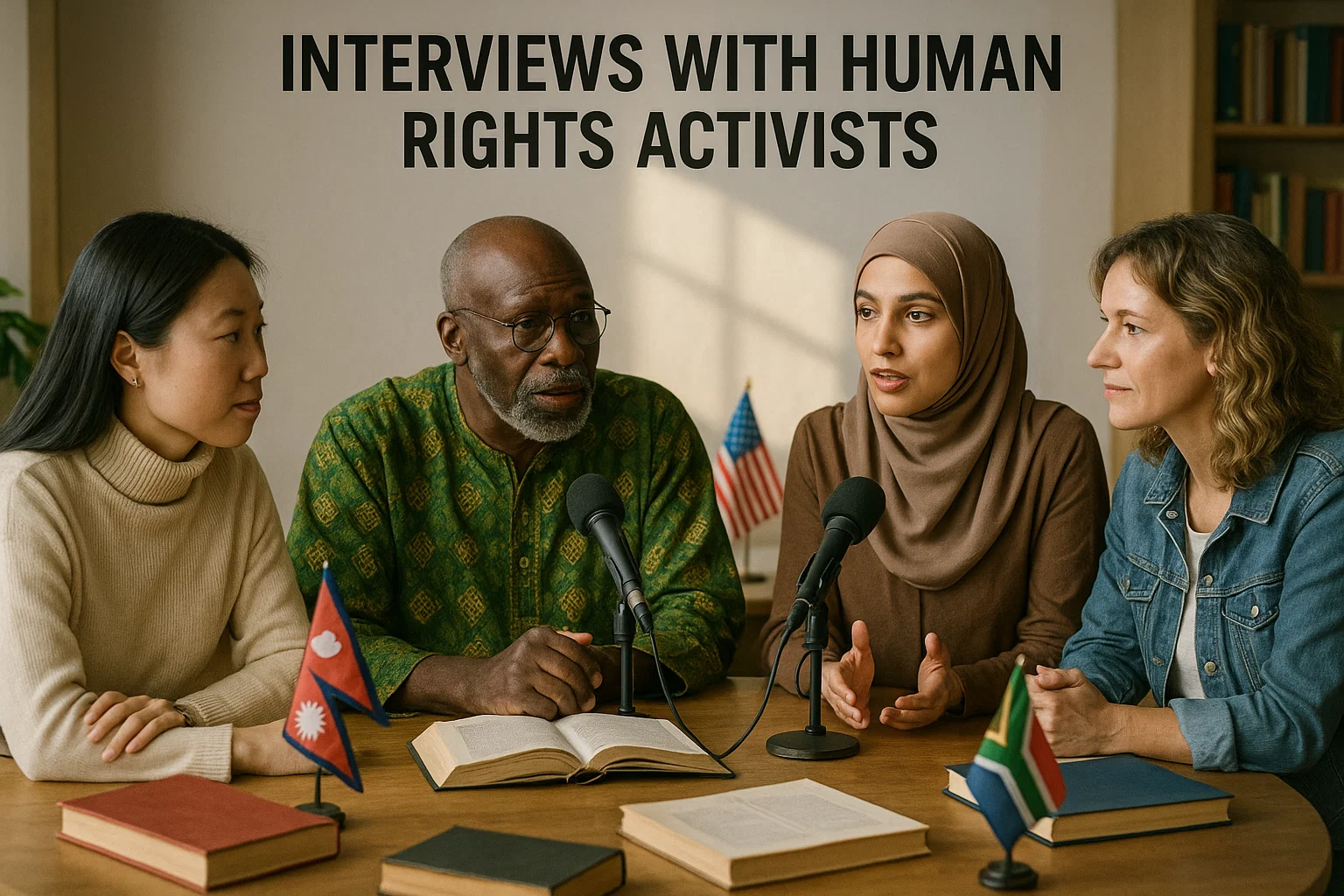
 In every generation, there are people who decide that silence is not an option. They speak when others stay quiet, stand when others kneel, and risk everything to defend the dignity of human life. These are the human rights activists ordinary individuals who turn compassion into action.
From Nobel laureates like Malala Yousafzai to grassroots defenders protecting land and labor rights in small communities, their stories show us the psychology of courage and empathy in its purest form. As of 2026, the United Nations counts over 350,000 registered human rights defenders worldwide, and many operate under constant risk. Yet they continue driven by conscience and the belief that equality is not a luxury but a right.
This article takes you inside the voices, emotions, and motivations behind activism, drawn from interviews and research that reveal what it truly means to live for justice.
Understanding the Psychology Behind Human Rights Activism
Human rights activism begins in the mind long before it reaches the streets or the courts. It’s often born from empathy an internal discomfort when someone witnesses injustice. Psychologists call this empathic distress, the emotional reaction that pushes people to act.
Dr. Kristin Monroe’s studies on altruism show that moral courage arises when empathy overrides fear. Activists consistently display a strong sense of moral identity they see defending others as part of who they are. They’re also guided by moral reasoning, believing that fairness and dignity must apply universally, not selectively.
But empathy alone doesn’t sustain activism. It takes emotional regulation the ability to handle fear, anger, and sadness while staying focused on purpose. Many activists describe a process of psychological transformation: what begins as outrage evolves into disciplined action.
They learn to work with others, set boundaries, and use emotion constructively. As one activist once said, “Courage is not the absence of fear, it’s choosing to act even when fear is present.”
This emotional maturity separates long-term advocates from those who burn out early. It’s the inner science of activism balancing passion with psychological endurance.
What Human Rights Activists Actually Do
While the media often highlights protests and speeches, real activism happens quietly and daily. Human rights activists wear many hats: educators, legal advocates, researchers, counselors, and communicators. Their work touches nearly every part of society.
They organize awareness campaigns, collect data on violations, provide legal aid, and support victims of violence or discrimination. Many operate within non-governmental organizations (NGOs) or work independently in their communities. Their ultimate goal is to promote systemic change through education, reform, and resilience.
Activists in different fields focus on specific rights such as freedom of speech, gender equality, environmental justice, or refugee protection. What ties them together is a shared belief that silence enables harm.
From Awareness to Action
Awareness without action is empathy wasted. Successful activists turn knowledge into movements. They design community workshops, lead peaceful demonstrations, and use digital platforms to amplify stories that would otherwise remain unheard.
In recent years, digital activism has grown rapidly. Online petitions, hashtags, and global solidarity campaigns have connected individuals across continents. Yet, real change still depends on local effort meeting people, understanding needs, and rebuilding trust.
In psychological terms, this transition from awareness to action mirrors self-efficacy the belief that one’s actions can make a difference. It’s this confidence that turns empathy into leadership.
Conversations That Inspire Change – Key Interview Highlights
When interviewing human rights activists, certain patterns emerge. Despite cultural and national differences, their emotional language is strikingly similar: hope, fear, exhaustion, and renewal.
An environmental activist from Kenya once described her journey this way:
“At first, I was angry at everything the government, corporations, even my neighbors. But over time, I realized activism isn’t just fighting enemies. It’s about protecting what we love.”
A women’s rights defender from Pakistan echoed a similar sentiment:
“People think we are brave. But bravery isn’t a feeling it’s a choice we make every morning.”
Common Themes Across Interviews
- Empathy as a Core Driver: Most activists began their work after witnessing injustice firsthand. Empathy moved them from observers to advocates.
- Resilience and Adaptability: Many described developing coping strategies to deal with setbacks journaling, prayer, therapy, or simply taking time to rest.
- Community Connection: They see activism as collective, not individual. Shared purpose helps reduce isolation and reinforces mental strength.
- Hope as a Discipline: Activists don’t wait for hope they build it through consistent small wins and solidarity.
These interviews show that human rights work is not just political it’s psychological. It’s a fight for the human spirit as much as for human law.
The Emotional Cost of Activism
Every movement for justice carries a hidden price: emotional strain. Behind every rally or campaign are sleepless nights, threats, and moments of despair.
A study by the International Journal of Human Rights (2025) found that over 60% of full-time human rights defenders experience symptoms of burnout or compassion fatigue. This emotional cost comes from constant exposure to trauma, violence, and inequality.
Psychologically, this is known as vicarious trauma when someone internalizes the suffering they witness. Over time, it can lead to anxiety, depression, or loss of motivation.
To counter this, activists use strategies similar to mental health professionals: mindfulness, peer support, supervision, and regular rest. Many organizations now train their members in emotional resilience and self-care.
An activist from Colombia put it beautifully:
“We can’t fight for others’ freedom if we lose our own peace.”
Human rights work demands emotional balance being compassionate without being consumed. The strongest activists are those who’ve learned to protect their inner world as carefully as they protect others.
How to Get Involved in Human Rights Activism
Human rights activism isn’t reserved for lawyers or politicians. It begins wherever you are with awareness, empathy, and small acts of courage.
If you’re inspired by the voices of activists, here’s how you can begin:
- Educate Yourself: Read about local and global issues. Follow credible sources like Amnesty International or Human Rights Watch.
- Volunteer: Many NGOs welcome volunteers for awareness campaigns, translation, or community outreach.
- Support Through Advocacy: Use social media to share verified information, amplify marginalized voices, and encourage civic participation.
- Join Youth Movements: Student groups and online communities are powerful entry points for young advocates.
- Practice Emotional Readiness: Before diving in, prepare mentally. Activism often involves emotional confrontation be ready to face it with balance and maturity.
Everyday Activism Starts Small
Real change doesn’t always make headlines. It happens in classrooms, offices, and neighborhoods. When someone chooses to speak against discrimination, donate to a relief fund, or help a marginalized neighbor, that’s human rights work too.
Think of activism as a mindset of empathy a habit of noticing when someone’s dignity is at risk and doing something about it. You don’t need a title or platform; you need persistence.
As psychologist Albert Bandura suggested, “People’s beliefs about their ability to produce change are the foundation of motivation and action.” Every person can be an agent of justice in their own environment.
Good Questions to Ask in Human Rights Interviews
If you’re a student, journalist, or researcher, thoughtful questions bring out the human side of activism. Here are meaningful questions rooted in psychology and ethics:
- What personal experience shaped your sense of justice?
- How do you deal with emotional burnout or hopelessness?
- What is the most difficult part of standing up for others?
- How do you find courage when fear is overwhelming?
- What keeps you motivated when change is slow?
- How can ordinary people support your cause effectively?
- What gives you hope about the future of human rights?
These questions don’t just collect data they create empathy between interviewer and activist. They reveal the shared humanity behind every campaign or protest.
The Future of Human Rights Activism
The face of activism is changing. The new generation of human rights defenders is digital, diverse, and globally connected. They understand technology’s power to both expose and challenge injustice.
Platforms like X (formerly Twitter), Instagram, and TikTok are now global stages for awareness. Yet, this visibility also comes with danger online harassment, misinformation, and digital surveillance.
To survive, future activists must blend psychological resilience with digital literacy. They’ll need to manage stress in virtual spaces and navigate ethical storytelling online.
We’re also seeing the rise of interdisciplinary activism, where psychologists, sociologists, and data scientists collaborate with lawyers and journalists to track and prevent violations. Artificial intelligence, if used ethically, could help monitor hate speech or detect patterns of abuse worldwide.
At the same time, grassroots action remains irreplaceable. Real transformation still begins in local communities through empathy, education, and shared purpose.
The future of activism will depend not only on laws but on our collective emotional intelligence the ability to listen, care, and act beyond personal gain.
The Human Spirit Behind Every Movement
Every time an activist speaks, they remind us of something ancient and true: the dignity of one life matters to the whole world.
Human rights work is not just about policies or protests; it’s about people. Each story whether of a refugee mother, a factory worker, or a young student carries the same message: no one should be invisible.
Psychologically, activism is a mirror. It reflects both the best and the most fragile parts of humanity. It shows our capacity for empathy, but also our need for belonging and justice.
The interviews shared here don’t just inform; they invite reflection. They remind us that change starts with emotion but survives through endurance.
As one young activist summarized, “I fight for rights not because I think I can fix everything, but because I refuse to stop caring.”
That refusal to give up on humanity is the real foundation of every movement. In the end, activism is an act of faith in people themselves.
TL;DR
This article captures the emotional and psychological dimensions of human rights activism. It explores what motivates activists, the emotional costs they face, and how they stay resilient through empathy, community, and purpose. Readers learn that activism is not only about fighting injustice but also about preserving one’s inner peace while creating outer change.

Imran Shahzad, M.Sc. Psychology (BZU, 2012), shares real-world mental health tips and emotional guidance in simple English for everyday South Asian readers. He worked closely with individuals facing grief, emotional loss, and life transitions, translating real-world psychological experiences into practical guidance for everyday readers.