The psychology of workplace bullying and harassment studies how repeated hostile behavior, power imbalance, and fear affect mental health at work. It matters today because toxic workplaces increase stress, anxiety, and burnout worldwide. Research now focuses on prevention, psychological safety, and organizational accountability to reduce long-term harm.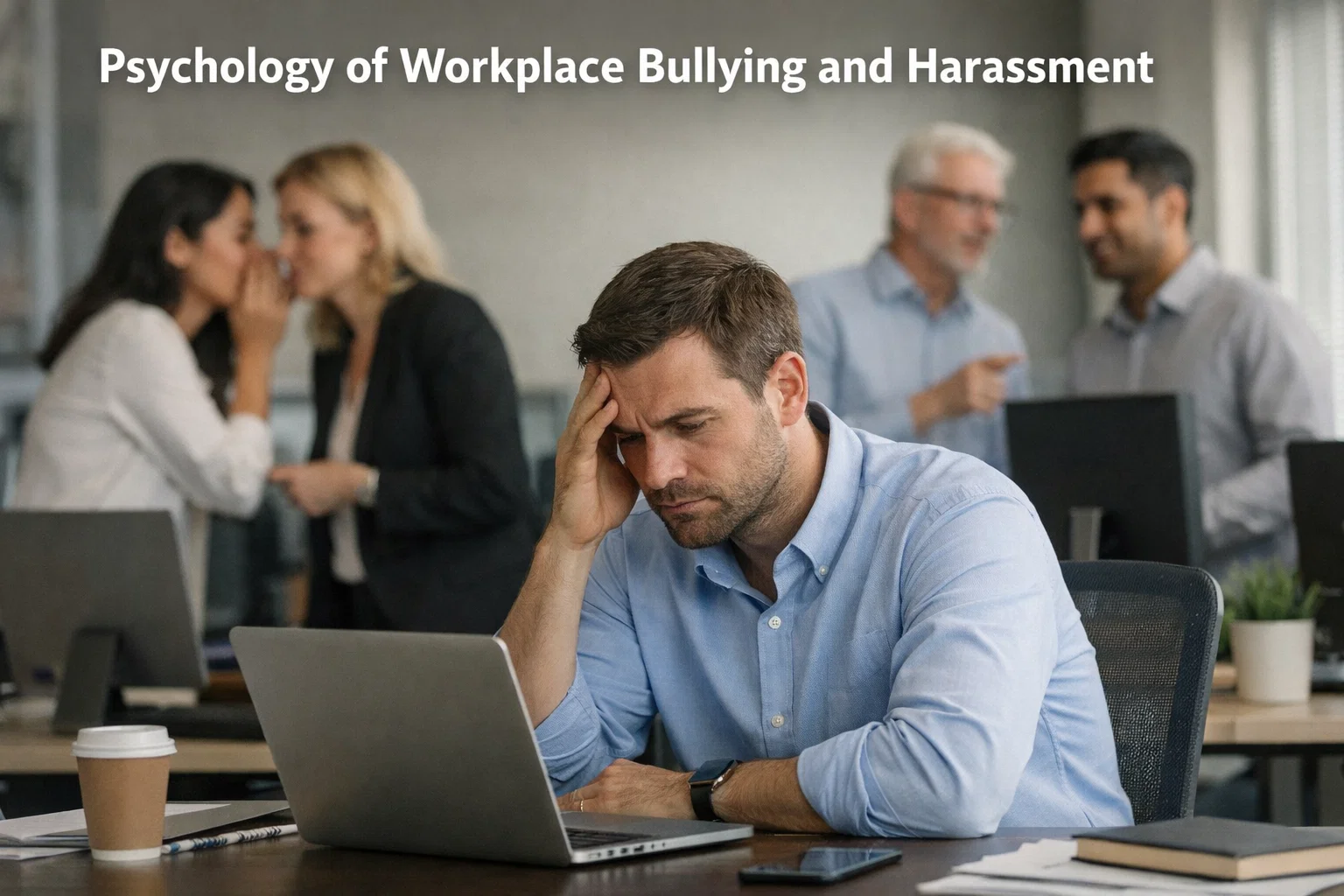
The Psychology of Workplace Bullying and Harassment
Workplace bullying and harassment are not personality clashes. They are patterns of psychological harm that quietly erode mental health, confidence, and even identity. Many people experience it but struggle to name it. Others sense something is wrong yet blame themselves. That confusion is part of the damage.
Here’s what matters. Bullying at work works because it targets the human mind. It plays on fear, power, silence, and social pressure. Understanding the psychology behind it is not academic curiosity. It is how people protect themselves, regain clarity, and make informed choices about their mental health.
This article explains what workplace bullying really is, why it happens, what it does to the brain, and how psychologists recommend responding. No exaggeration. No empty motivation. Just clear thinking grounded in psychology and real experience.
Facts About Workplace Bullying and Harassment
| Topic | Key Facts |
|---|---|
| Definition | Repeated hostile behavior with power imbalance |
| Core Psychology | Control, insecurity, fear, silence |
| Common Forms | Isolation, humiliation, false accusations |
| Mental Health Effects | Anxiety, depression, cognitive stress |
| Brain Impact | Elevated cortisol, hypervigilance |
| Red Flags | Gaslighting, public shaming, rule shifting |
| HR Role | Protects organization, not always victim |
| Coping Approach | Documentation, boundaries, support |
| Prevention Focus | Psychological safety, clear policies |
| Current Direction | Research-based intervention and culture change |
What Is Workplace Bullying and Harassment?
Workplace bullying is repeated behavior that humiliates, intimidates, undermines, or isolates a person at work. Harassment often overlaps but may include discrimination, threats, or coercion tied to identity, status, or power.
The key elements are repetition, intent or impact, and imbalance of power. One sharp comment is not bullying. A pattern of subtle insults, constant criticism, exclusion, or sabotage is.
Bullying can look quiet. It often hides behind professionalism. It may appear as “just feedback,” “team pressure,” or “high standards.” Psychologically, that ambiguity is dangerous. When harm is unclear, victims doubt their own perception. That doubt keeps the cycle going.
The Difference Between Bullying, Harassment, and Conflict
Conflict is mutual. Bullying is one-sided. Harassment often involves protected characteristics, but bullying does not need them to cause serious psychological injury.
In conflict, both parties have power and voice. In bullying, one person or group controls the narrative. The target adapts. The bully escalates.
What Is the Psychology Behind Bullying in the Workplace?
Bullying is rarely about the victim. It is about control, insecurity, and threat perception inside the bully or the system that enables them.
Many workplace bullies feel threatened by competence, independence, or difference. Others copy behavior they saw rewarded in past environments. Some use bullying to manage their own anxiety by dominating someone else.
Psychologists note three common drivers:
- Fear of losing status or authority
- Inability to regulate emotions under pressure
- Learned behavior in toxic organizational cultures
Bullying is often strategic. The bully tests boundaries, watches reactions, and escalates when there are no consequences.
Why Power and Silence Protect Bullies
Silence is not agreement. It is survival. Bystanders often stay quiet because they fear becoming the next target. This creates what psychologists call pluralistic ignorance. Everyone thinks they are alone in seeing the problem.
Organizations that reward performance without accountability unintentionally protect bullies. Power plus silence is the perfect environment for psychological harm.
Psychological Effects of Workplace Harassment on Mental Health
The damage is cumulative. Workplace bullying does not usually cause a single breakdown. It causes slow psychological erosion.
Common effects include chronic anxiety, depression, sleep disruption, loss of confidence, emotional numbness, and intrusive thoughts about work. Many people report feeling “smaller” over time.
The brain interprets ongoing hostility as threat. That keeps the nervous system activated. Over time, this constant stress response drains emotional energy and weakens concentration.
What a Toxic Job Does to Your Brain
Prolonged exposure to bullying increases cortisol. High cortisol affects memory, decision-making, and emotional regulation. People become hypervigilant. They overthink emails. They replay conversations. They struggle to relax even outside work.
This is not weakness. It is biology responding to threat.
The Three Levels of Hostile Behavior at Work
Psychologists often describe workplace hostility in layers.
The first level is subtle. Passive-aggressive comments, exclusion from meetings, eye-rolling, or dismissive tone. These behaviors are easy to deny and hard to prove.
The second level is overt. Public criticism, shouting, humiliation, or threats. At this stage, mental health symptoms usually intensify.
The third level is systemic. Policies, workloads, or evaluations are used as weapons. This is the most damaging because it feels official. Victims often lose faith in fairness altogether.
Red Flags of a Toxic Workplace You Should Not Ignore
A major red flag is constant self-doubt after interactions. Another is being blamed without clear feedback. Gossip, shifting expectations, and selective enforcement of rules also signal danger.
When mistakes are remembered but achievements are ignored, psychological safety disappears. When questions are treated as incompetence, learning shuts down.
Psychological Effects of False Accusations at Work
False accusations trigger intense fear and shame. They attack reputation and identity at the same time. Psychologically, this can lead to paranoia, withdrawal, and long-term distrust of authority.
Even when accusations are disproven, the emotional damage often remains.
How to Deal With a Coworker Who Bullies You
The goal is not to win. The goal is to protect your mental health and clarity.
Start by documenting patterns. Dates, words, witnesses, and outcomes matter. This is grounding. It keeps reality intact when gaslighting begins.
Set boundaries where safe. Short, calm statements reduce emotional reward for the bully. Avoid over-explaining. Bullies feed on reactions.
Seek support outside the toxic environment. Isolation strengthens harm. Perspective restores balance.
How to Shut Down a Bully at Work Without Escalation
Clear, neutral responses work best. Name the behavior without emotion. For example, “That comment is not appropriate for this discussion.” Then disengage.
Psychologically, this removes the bully’s leverage without inviting conflict.
What to Do If a Manager Is Targeting You
When authority is involved, the situation changes. Power imbalance increases stress and limits options.
Focus on evidence, not emotion. Keep records. Understand policies. Seek advice before confronting. Sometimes the healthiest response is planning an exit.
Staying in chronic psychological harm does not build resilience. It damages it.
Does HR Really Handle Workplace Bullying?
HR exists to protect the organization, not individuals. That does not mean reporting is useless. It means expectations must be realistic.
Documentation improves outcomes. So does framing concerns around behavior and policy, not personality. When internal systems fail, external support becomes necessary.
The 5 Ds of Harassment and the 5 Cs of Psychological Safety
The 5 Ds encourage intervention strategies: direct action, distraction, delegation, delay, and documentation. They empower people without forcing confrontation.
The 5 Cs of psychological safety include clarity, consistency, compassion, communication, and consequences. When these are missing, bullying thrives.
Signs of Work-Related Stress Caused by Bullying
Watch for persistent fatigue, irritability, loss of motivation, headaches, stomach issues, and emotional withdrawal. These are not normal work stress signals. They are warning signs.
Ignoring them prolongs harm.
What Psychologists Say About Bullying and Recovery
Recovery starts with validation. Naming the experience reduces self-blame. Therapy helps restore boundaries and trust. Time in a healthy environment rewires stress responses.
Leaving a toxic job is not quitting. It is self-preservation.
When It’s Time to Protect Your Mental Health and Move On
If your identity, sleep, or sense of safety is consistently damaged, the cost is too high. No role is worth chronic psychological injury.
Clarity is power. Understanding the psychology of workplace bullying and harassment helps people step out of confusion and back into agency.
Mental health is not negotiable.
Frequently Asked Questions:
What is workplace bullying and harassment?
Workplace bullying and harassment involve repeated behaviors that intimidate, humiliate, isolate, or undermine an employee. The key factor is a power imbalance, not just disagreement. It can come from coworkers, managers, or teams and often causes long-term psychological harm.
What is the psychology behind bullying in the workplace?
Psychologists link workplace bullying to insecurity, fear of losing control, and poor emotional regulation. Bullying is often reinforced by silent bystanders and organizational cultures that reward results over behavior. It is more about power than personality.
What are the psychological effects of workplace harassment?
Common effects include anxiety, depression, sleep problems, emotional exhaustion, low self-esteem, and chronic stress. Over time, the brain stays in a threat-response state, making it hard to focus, relax, or feel safe at work.
What are the three levels of hostile behavior at work?
The three levels are subtle hostility like exclusion and sarcasm, overt hostility such as public humiliation or threats, and systemic hostility where policies or evaluations are used to target someone. Each level increases psychological harm.
What is the biggest red flag of a toxic workplace?
A major red flag is constant self-doubt after interactions at work. When employees regularly question their reality, feel unsafe speaking up, or fear making small mistakes, psychological safety is already broken.
What are the psychological effects of false accusations at work?
False accusations trigger intense fear, shame, and loss of trust. They can lead to hypervigilance, emotional withdrawal, and long-term anxiety, even if the accusations are later disproven.
How do you deal with a coworker who bullies you?
Psychologists recommend documenting patterns, setting calm boundaries when safe, and seeking external support. Avoid emotional reactions that reward the bully. The goal is protection, not confrontation.
How can you shut down a bully at work?
Clear, neutral responses work best. Naming the behavior briefly and disengaging reduces the bully’s control. Emotional arguments usually escalate the situation rather than stop it.
What should you do if a manager is targeting you?
When power imbalance exists, focus on evidence, policies, and documentation. Seek advice before confronting. In some cases, planning a safe exit is the healthiest psychological decision.
Does HR handle workplace bullying effectively?
HR primarily protects the organization. While reporting can help, outcomes depend on documentation and company culture. Employees should have realistic expectations and protect themselves emotionally.
What are the 5 Ds of harassment?
The 5 Ds are direct action, distraction, delegation, delay, and documentation. These strategies help people respond to harassment without putting themselves at risk.
What does having a toxic job do to your brain?
A toxic job increases stress hormones like cortisol, leading to hypervigilance, memory issues, emotional numbness, and burnout. These effects are biological responses, not personal weakness.

Muhammad Nawaz is the founder of Psyvanta.com and writes simple, practical psychology content for South Asian readers. He focuses on real-life problems like stress, motivation, relationships, and daily mental well-being, turning research into clear advice people can actually use.