The role of psychology in conflict and negotiation strategies explains how emotions, perception, and thinking patterns shape disagreements and agreements. It matters today because conflicts are increasing in workplaces, families, and societies. Psychology-based negotiation focuses on emotional regulation, empathy, and fairness, making future conflict resolution more cooperative and sustainable.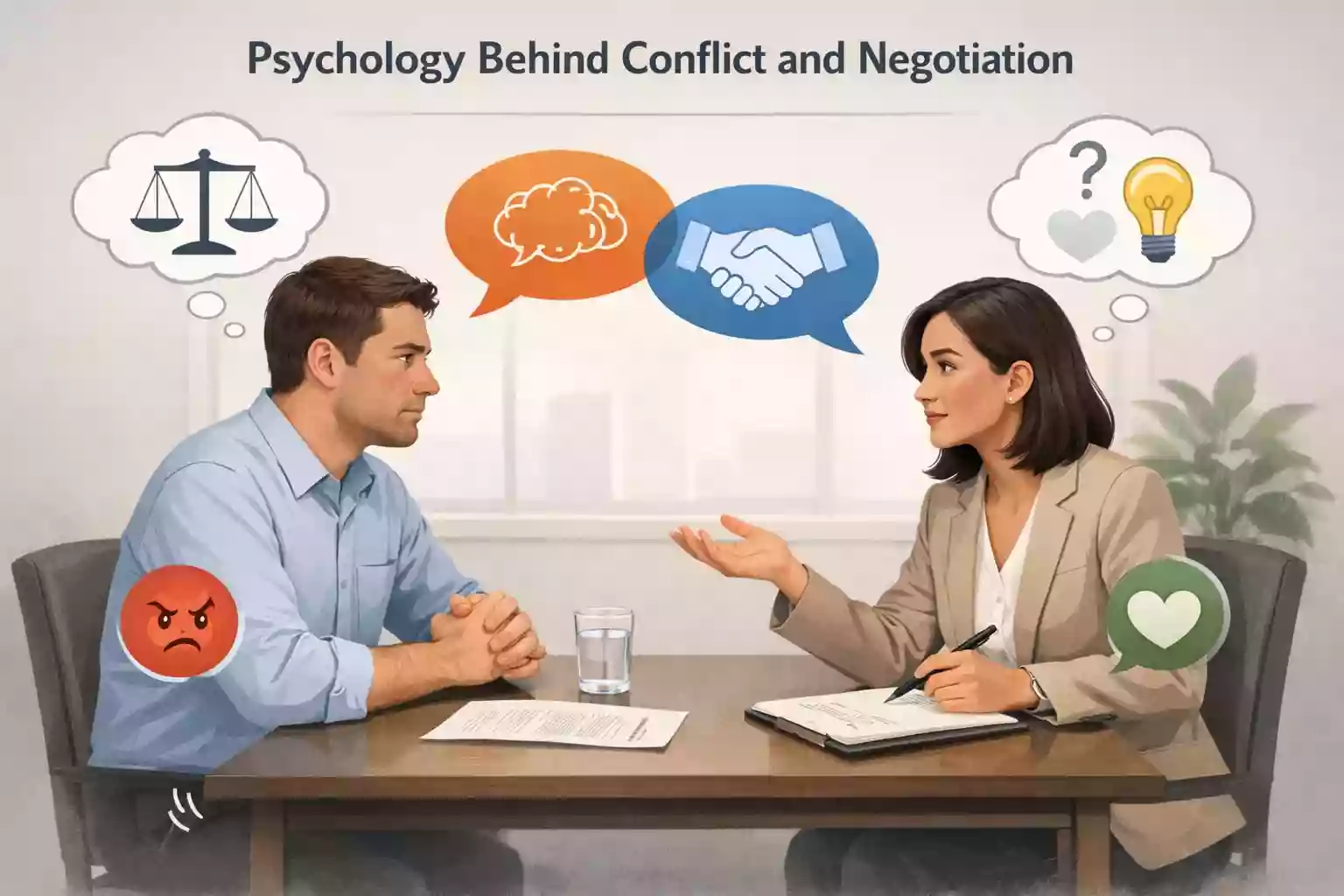
Conflict is not a flaw in human relationships. It is a signal. It tells us that needs, values, or expectations are not aligned. Negotiation is the response we choose when conflict appears. Psychology sits at the center of both. It explains why disagreements escalate, why talks break down, and why some people resolve tension calmly while others make it worse without meaning to.
Here’s what matters. Conflict and negotiation are not just about words, logic, or power. They are shaped by emotions, perception, memory, bias, fear, and trust. When we understand the psychology behind these forces, we stop reacting blindly. We start responding with intention.
This article explains the role of psychology in conflict and negotiation strategies in clear, practical terms. No academic overload. No theory for theory’s sake. Just psychology that works in real life.
Psychology in Conflict and Negotiation
| Aspect | Explanation |
|---|---|
| Definition | Use of psychological principles to manage conflict and negotiate outcomes |
| Core Focus | Emotions, perception, communication, and decision-making |
| Real-World Use | Workplace disputes, relationships, diplomacy, business deals |
| Key Benefits | Better understanding, reduced tension, fair agreements |
| Common Tools | Active listening, emotional control, reframing, empathy |
| Current Status | Widely applied in psychology, management, and conflict resolution practices |
| Future Direction | More emphasis on emotional intelligence and collaborative negotiation models |
What Is the Psychology of Conflict?
Psychology defines conflict as a mental and emotional state that arises when a person perceives a threat to their needs, identity, goals, or values. Notice the word perceives. Conflict does not always begin with reality. It often begins with interpretation.
Two people can face the same situation and react very differently. One stays calm. The other feels attacked. That difference is psychological.
Conflict usually involves three internal processes working together.
First, perception. We interpret words, actions, and intentions through our past experiences and beliefs. A neutral comment can feel insulting if it touches insecurity or past hurt.
Second, emotion. Anger, fear, shame, or frustration quickly follow perception. Once emotions rise, the brain shifts into defense mode. Logic weakens. Reaction takes over.
Third, behavior. The emotional brain drives what we say and do. We interrupt, withdraw, attack, or shut down.
Psychology helps us slow this chain. It teaches awareness of how thoughts create emotions, and how emotions shape behavior. Without this awareness, conflict becomes automatic and destructive.
The Four Types of Conflict in Psychology
Not all conflicts look the same. Psychology identifies four main types, each requiring a different approach.
Intrapersonal Conflict
This happens inside a person. It is the mental struggle between opposing desires, beliefs, or values. Choosing between career and family. Wanting change but fearing risk. These conflicts create stress, anxiety, and indecision.
Psychology helps by clarifying values, reducing cognitive overload, and strengthening emotional regulation.
Interpersonal Conflict
This is the most visible form. Conflict between two people. Partners, friends, colleagues, or family members. Miscommunication, unmet expectations, and emotional triggers are common causes.
Here, psychology focuses on communication skills, empathy, and emotional awareness.
Intragroup Conflict
This occurs within a group or team. It may involve competition, role confusion, or power struggles. Left unmanaged, it damages trust and productivity.
Psychological strategies aim to clarify roles, align goals, and address group dynamics.
Intergroup Conflict
This involves conflict between groups. Departments, communities, cultures, or nations. Bias, identity threat, and group loyalty play strong roles.
Psychology explains how stereotypes and social identity escalate these conflicts and how dialogue and shared goals can reduce them.
What Is Conflict Resolution in Psychology?
Conflict resolution in psychology is not about forcing agreement. It is about restoring psychological balance.
At its core, conflict resolution involves four psychological goals.
First, emotional regulation. People cannot resolve conflict while emotionally flooded. Calming the nervous system comes first.
Second, mutual understanding. Each side must feel heard and acknowledged. Not agreed with. Understood.
Third, cognitive clarity. Misinterpretations and assumptions are identified and corrected.
Fourth, collaborative problem-solving. Solutions focus on needs rather than positions.
Psychology emphasizes that unresolved emotions block resolution. That is why logic alone rarely works. Feelings must be addressed before solutions stick.
Conflict Management Strategies in Psychology
Psychology outlines five main strategies people use to manage conflict. None are inherently good or bad. Their effectiveness depends on timing, context, and emotional awareness.
Avoiding
This strategy involves withdrawing from conflict. It reduces immediate stress but often allows problems to grow. Psychology suggests avoidance is useful when emotions are too intense or the issue is minor.
Accommodating
Here, one person gives in to preserve harmony. It can maintain relationships short term but may create resentment if overused.
Competing
This approach prioritizes winning. It relies on power and assertiveness. Psychology warns that frequent competition damages trust and relationships.
Compromising
Both sides give up something. It feels fair and efficient but may leave deeper needs unmet.
Collaborating
This is the most psychologically healthy strategy when time and trust allow. It focuses on understanding needs and finding solutions that benefit both sides.
Psychology teaches flexibility. Mature conflict management means choosing the right strategy, not repeating the same one every time.
The Psychology of Negotiation
Negotiation is structured conflict. It is a psychological exchange where each side tries to satisfy needs while managing risk, trust, and emotion.
Psychology shows that negotiation outcomes depend less on logic and more on mental factors.
Perception of fairness shapes cooperation.
Emotional control influences credibility.
Trust determines openness.
Cognitive biases distort judgment.
People often believe they negotiate rationally. In reality, emotions guide decisions first, and logic follows to justify them.
Understanding negotiation psychology allows you to anticipate reactions, manage your own emotions, and guide discussions toward productive outcomes.
Psychological Tools Used in Negotiation
Effective negotiators rely on psychological tools, not manipulation.
Active Listening
Listening signals respect and safety. Psychologically, it lowers defensiveness and increases flexibility. People are more willing to compromise when they feel heard.
Framing and Reframing
How an issue is presented affects how it is received. Framing focuses attention on gains rather than losses, shared goals rather than threats.
Emotional Regulation
Calm negotiators appear confident and trustworthy. Managing tone, pace, and body language keeps discussions grounded.
Anchoring
The first number or idea introduced often shapes the rest of the negotiation. Psychology explains this as a cognitive shortcut the brain uses to judge value.
Rapport Building
Trust increases cooperation. Small gestures of respect and empathy activate social bonding mechanisms in the brain.
These tools work because they align with how the human mind naturally processes interaction.
The Five C’s of Conflict and Negotiation
Psychology-based models often summarize effective conflict handling through the Five C’s.
Communication ensures clarity and reduces misinterpretation.
Control refers to emotional self-regulation.
Cooperation shifts focus from winning to solving.
Compromise allows flexibility without surrendering core needs.
Clarity helps define goals, limits, and expectations.
When these elements are present, conflict becomes manageable rather than threatening.
The 70–30 Rule in Negotiation
The 70–30 rule suggests that successful negotiators listen about 70 percent of the time and speak 30 percent.
Psychologically, this works for several reasons.
Listening builds trust.
It reveals hidden interests.
It reduces emotional escalation.
It gives the listener strategic insight.
People feel respected when they speak freely. Respect lowers resistance. Resistance is the real enemy in negotiation, not disagreement.
The Seven Strategies for Resolving Conflict
Psychology identifies several practical strategies that consistently reduce conflict intensity.
Clarify perceptions before reacting.
Separate the person from the problem.
Focus on interests, not positions.
Regulate emotions before discussing solutions.
Use neutral language.
Seek common ground.
Agree on next steps, not total resolution.
These strategies shift the brain from threat mode to problem-solving mode.
The Four C’s of Conflict Resolution in Psychology
Some models simplify resolution into four psychological pillars.
Calm the emotional response.
Connect through empathy and listening.
Clarify misunderstandings and needs.
Collaborate on solutions.
This structure works because it mirrors how the brain regains balance after stress.
The Four C’s of Negotiation
In negotiation psychology, the four C’s often emphasize process.
Confidence without aggression.
Credibility through honesty and consistency.
Creativity in solution-building.
Commitment to follow-through.
Negotiations fail not because of poor offers, but because of broken trust or emotional mismanagement.
What Is Conflict Negotiation?
Conflict negotiation is the deliberate use of communication and psychological awareness to transform disagreement into agreement.
It differs from argument. Arguments aim to win. Negotiation aims to resolve.
Psychology teaches that effective conflict negotiation involves managing emotions first, interests second, and solutions last. Skipping this order leads to breakdown.
Who Is the Father of Negotiation?
Roger Fisher is widely recognized as the father of modern negotiation psychology. His work emphasized principled negotiation, focusing on interests rather than positions.
The key psychological insight behind his approach is simple. People resist being forced but respond to fairness and respect.
This idea remains central to modern conflict resolution across law, business, and diplomacy.
Why Psychology Makes Conflict and Negotiation Work
Here’s the bottom line.
Conflict is emotional before it is logical. Negotiation is psychological before it is strategic.
When people ignore psychology, they escalate tension, damage trust, and repeat the same patterns. When they understand it, they gain choice.
Psychology helps you pause instead of react.
It helps you listen instead of defend.
It helps you negotiate without losing yourself or the relationship.
Conflict does not disappear when psychology is applied. It becomes manageable, meaningful, and often transformative.
That is the true role of psychology in conflict and negotiation strategies.
FAQs:
What is the psychology of negotiation?
The psychology of negotiation focuses on how thoughts, emotions, perceptions, and biases influence decision-making during discussions. It explains why trust, emotional control, and perceived fairness often matter more than logic alone when reaching agreements.
What are the conflict management strategies in psychology?
Psychology describes five main conflict management strategies: avoiding, accommodating, competing, compromising, and collaborating. Each strategy fits different situations depending on emotional intensity, power balance, and relationship goals.
What are the five main strategies used in negotiation and conflict resolution?
The five main strategies are avoiding, accommodating, competing, compromising, and collaborating. Psychology emphasizes flexibility, choosing the strategy that best fits the situation rather than relying on one approach all the time.
What is the psychology of conflict?
The psychology of conflict studies how perception, emotion, and behavior interact during disagreement. Conflict often begins with how a situation is interpreted, not with objective facts, and is shaped by fear, ego, past experiences, and unmet needs.
What are the four types of conflict in psychology?
The four types are intrapersonal conflict within a person, interpersonal conflict between individuals, intragroup conflict within a group, and intergroup conflict between groups. Each type involves different psychological dynamics.
What are the 5 C’s of conflict?
The 5 C’s of conflict are communication, control, cooperation, compromise, and clarity. These elements help reduce emotional tension and guide conflicts toward constructive outcomes.
What are the 5 C’s of negotiation?
In negotiation, the 5 C’s commonly refer to communication, confidence, credibility, creativity, and commitment. These psychological factors support trust, flexibility, and long-term agreement.
What is conflict negotiation?
Conflict negotiation is the process of using communication and psychological awareness to resolve disagreements. It focuses on managing emotions, understanding interests, and finding solutions acceptable to all sides.
What is the 70–30 rule in negotiation?
The 70–30 rule suggests listening about 70 percent of the time and speaking 30 percent. Psychology shows that active listening reduces defensiveness and increases cooperation during negotiations.
What are the seven strategies for resolving conflict?
Common strategies include clarifying perceptions, separating the person from the problem, focusing on interests, regulating emotions, using neutral language, seeking common ground, and agreeing on next steps.
What are the 4 C’s of conflict resolution?
The 4 C’s are calm, connect, clarify, and collaborate. This model reflects how the brain moves from emotional reaction to problem-solving during conflict resolution.
What is conflict resolution in psychology?
Conflict resolution in psychology is the process of reducing emotional tension, correcting misunderstandings, and restoring balance through empathy, communication, and collaborative problem-solving.
What are the 4 C’s of negotiation?
The 4 C’s of negotiation are confidence, credibility, creativity, and commitment. These traits help negotiators manage emotions, build trust, and sustain agreements.
What psychological tools are used in negotiation?
Key tools include active listening, emotional regulation, framing, anchoring, rapport building, and empathy. These tools work because they align with how the human brain processes trust and threat.
Who is the father of negotiation?
Roger Fisher is widely regarded as the father of modern negotiation. His work on principled negotiation emphasized fairness, interests over positions, and psychological respect in resolving conflict

Muhammad Nawaz is the founder of Psyvanta.com and writes simple, practical psychology content for South Asian readers. He focuses on real-life problems like stress, motivation, relationships, and daily mental well-being, turning research into clear advice people can actually use.