
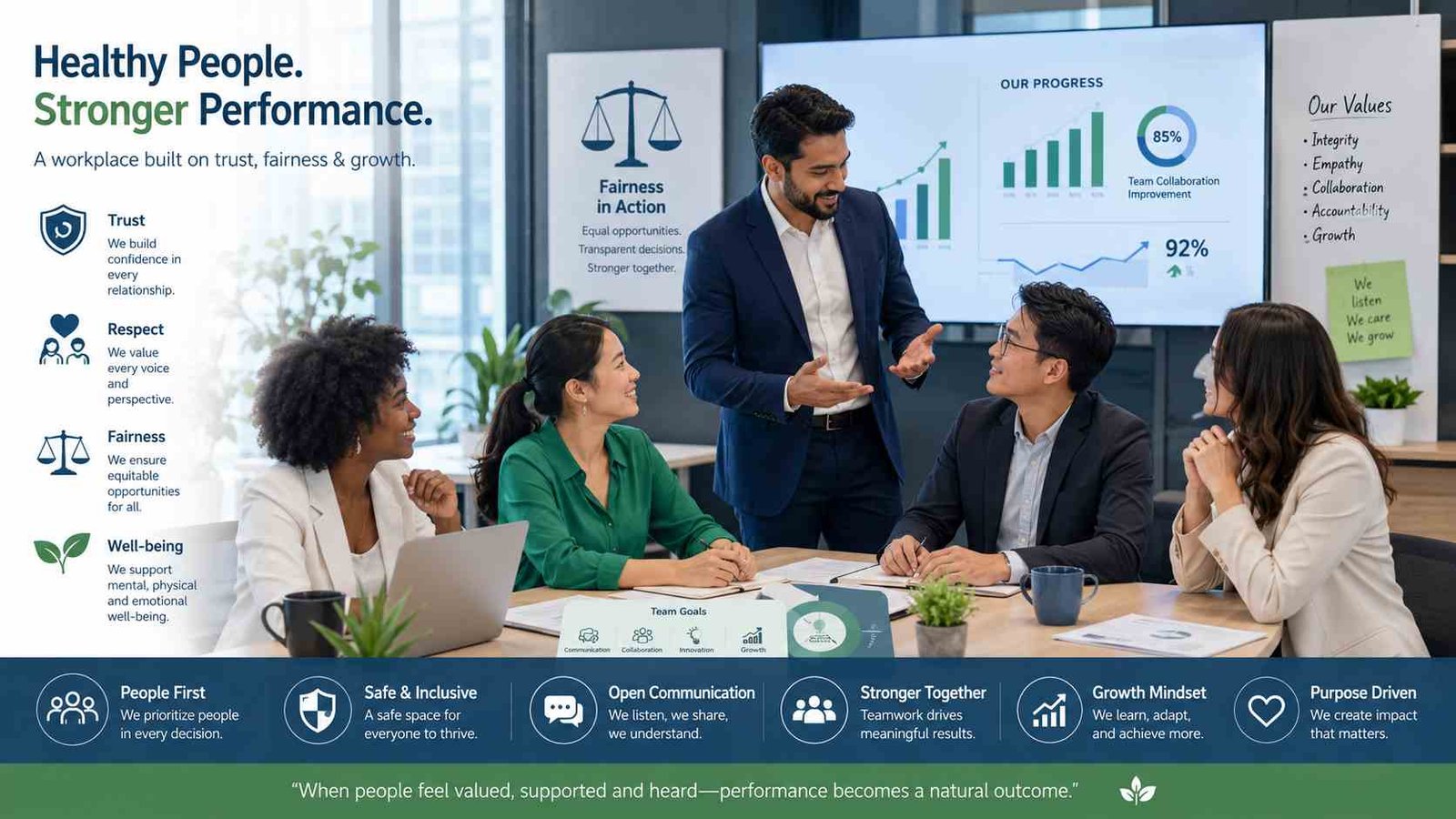
 Employees do not simply work for salaries. They also work for respect, fairness, trust, and emotional security. In many workplaces, people quietly judge whether managers treat employees equally, whether rewards are fair, and whether leadership communicates honestly. These daily experiences shape employee behavior more than many organizations realize.
Research in organizational psychology consistently shows that fairness affects productivity, workplace relationships, stress levels, job satisfaction, and employee loyalty. A report published by the American Psychological Association found that employees who feel valued and fairly treated are significantly more engaged and mentally healthier than those working in unfair environments. Fairness creates emotional stability, while injustice often creates frustration, distrust, and burnout.
The impact of organizational justice on employee behavior has become even more important in modern workplaces where employees expect transparency, inclusion, and psychological safety. Workers today are more aware of emotional well-being and workplace culture than previous generations. They want workplaces where effort matters, communication feels honest, and leaders treat people with dignity.
Organizational justice is not only a human resources topic. It is a psychological force that shapes motivation, emotional health, teamwork, and professional identity. When fairness exists, employees usually become more cooperative, productive, and committed. When fairness disappears, stress and negative workplace behaviors often grow.
Here’s what matters most: employees may forget small workplace details, but they rarely forget how they were treated.
What Is Organizational Justice?
Organizational justice refers to employees’ perception of fairness within their workplace. It describes how workers evaluate decisions, communication, policies, leadership behavior, and treatment inside an organization. In psychology, fairness is not limited to money or promotions. It also includes emotional respect, transparency, equal opportunities, and dignity during workplace interactions.
Human beings naturally compare situations. Employees often observe how managers distribute rewards, assign workloads, respond to mistakes, and recognize achievements. These observations shape emotional reactions and workplace attitudes. Even when organizations have strong policies on paper, employees may still feel unfairly treated if leadership behavior appears biased or disrespectful.
Psychologists believe fairness strongly influences emotional well-being because it affects a person’s sense of value and belonging. Employees want to feel that their effort matters. They want their voices heard and their concerns respected. When organizations create fair systems, employees usually trust leadership more and participate more actively in workplace goals.
Unfair workplaces often create emotional tension. Employees may begin questioning decisions, avoiding teamwork, or emotionally disconnecting from their organization. Small moments of unfairness can slowly damage trust over time.
Organizational justice also affects workplace culture. Fair workplaces usually experience healthier communication, lower turnover, and stronger collaboration. Employees feel safer sharing ideas and feedback when they believe leadership acts honestly.
Many organizations focus heavily on performance metrics while ignoring fairness. But employees do not only evaluate outcomes. They also pay attention to how those outcomes are created.
The Four Types of Organizational Justice
Psychologists divide organizational justice into four major categories. Each type affects employee behavior differently.
Distributive Justice
Distributive justice focuses on fairness in outcomes. This includes salary, promotions, bonuses, recognition, workload distribution, and career opportunities.
Employees naturally compare their rewards with their effort and contribution. If workers believe outcomes are fair, motivation and satisfaction usually increase. But when employees feel someone receives rewards unfairly, emotional frustration often appears quickly.
Imagine two employees working equally hard on a project. One receives recognition and promotion while the other is ignored without explanation. Even if the overlooked employee stays quiet, resentment may grow internally. Motivation often decreases because the employee no longer trusts the reward system.
Distributive justice affects more than money. It also shapes emotional commitment. Employees who feel appreciated are more likely to remain loyal and productive.
Organizations that create transparent reward systems often build stronger morale and workplace trust.
Procedural Justice
Procedural justice refers to fairness in organizational processes and decision-making methods.
Employees care deeply about whether workplace decisions follow clear and consistent procedures. Even when outcomes are disappointing, workers may still accept them if they believe the process was honest and unbiased.
For example, an employee may not receive a promotion but still respect management if the evaluation process was transparent and professionally handled.
Problems begin when procedures appear inconsistent or influenced by favoritism. Employees may feel powerless if rules change depending on personal relationships or hidden agendas.
Fair procedures increase trust because employees believe leadership decisions are guided by principles rather than personal bias. Transparent systems also reduce workplace rumors and emotional uncertainty.
Organizations with strong procedural justice often experience healthier communication and stronger long-term employee commitment.
Interpersonal Justice
Interpersonal justice focuses on respect and dignity during workplace interactions.
Employees want to feel treated like human beings rather than machines. Respectful communication from managers strongly affects emotional health and workplace morale.
Simple behaviors matter greatly:
- Listening carefully
- Speaking professionally
- Avoiding humiliation
- Showing empathy
- Providing constructive feedback respectfully
Harsh criticism, public embarrassment, sarcasm, or disrespectful leadership can seriously damage emotional safety inside workplaces.
Many employees leave jobs not because of workload alone, but because of how supervisors treat them daily.
Supportive leadership encourages confidence and cooperation. Employees become more willing to communicate openly when they feel emotionally safe.
Interpersonal justice is especially important during stressful situations like layoffs, performance reviews, or workplace conflict. Respectful treatment during difficult moments often determines whether employees maintain trust in leadership.
Informational Justice
Informational justice refers to honesty and transparency in workplace communication.
Employees want clear explanations about decisions, policy changes, evaluations, and organizational direction. Lack of communication creates uncertainty and emotional stress.
When leadership hides information or provides vague explanations, employees may begin assuming the worst. Rumors spread quickly in environments where communication feels unclear or dishonest.
Transparent communication reduces anxiety. Workers feel more included when leaders explain decisions openly and honestly.
For example, during organizational restructuring, employees usually handle change better when management communicates clearly about expectations and reasons behind decisions.
Informational justice strengthens psychological safety because employees feel leadership respects them enough to share truthful information.
How Organizational Justice Impacts Employee Behavior
Employee behavior is deeply connected to emotional experiences inside the workplace. Fairness affects how employees think, feel, and respond every day.
When employees feel fairly treated, they often show positive workplace behaviors such as:
- Higher motivation
- Better teamwork
- Greater loyalty
- Stronger productivity
- Increased creativity
- Helpful attitudes toward coworkers
Employees who trust organizational systems usually contribute beyond minimum expectations. They become more engaged because they believe their effort matters.
On the other hand, unfair treatment often creates negative behavioral responses.
Employees experiencing injustice may:
- Withdraw emotionally
- Avoid teamwork
- Reduce effort
- Arrive late frequently
- Stop sharing ideas
- Experience frustration
- Develop distrust toward management
Sometimes these reactions happen quietly. Employees may continue showing up physically while mentally disconnecting from the organization.
Behavioral psychology suggests fairness influences self-worth and emotional identity. Employees want to feel respected and valued. When organizations repeatedly ignore fairness, workers often lose emotional connection with their jobs.
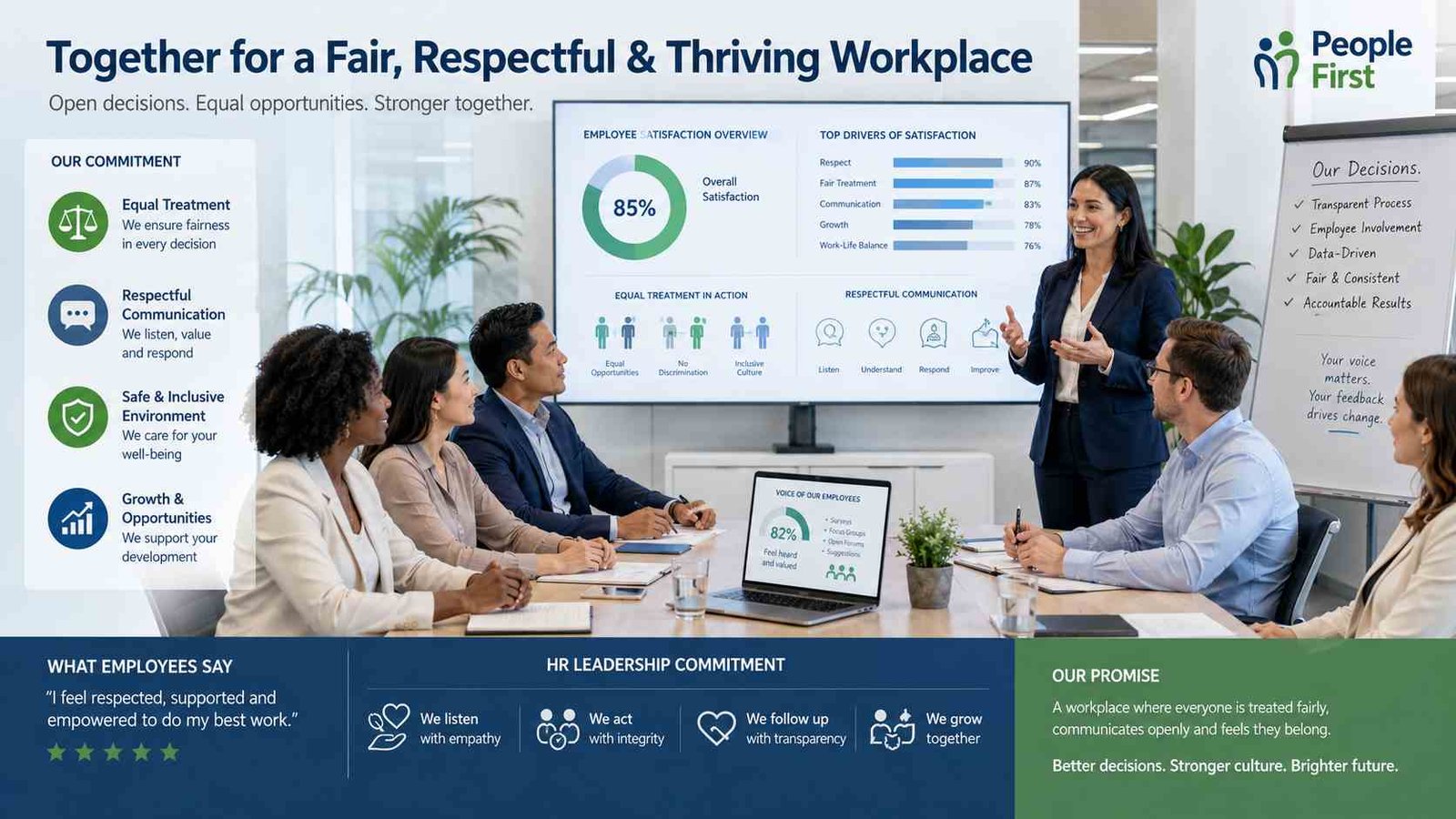
Fair workplaces also improve cooperation during stressful situations. Employees become more willing to support organizational goals during difficult periods when trust already exists.
Bottom line: fairness shapes workplace behavior because people respond emotionally to how they are treated.
How Does Organizational Structure Impact Employee Behaviour?
Organizational structure influences communication, authority, decision-making, and employee relationships. The way an organization is designed affects how employees behave psychologically and professionally.
Highly rigid workplace structures sometimes create emotional distance between leadership and employees. Workers may feel their opinions do not matter if communication flows only from the top downward.
In extremely hierarchical environments:
- Employees may fear making mistakes
- Innovation may decrease
- Communication becomes limited
- Employees avoid sharing feedback
Fear-based cultures often reduce emotional safety. Workers become cautious instead of creative.
Flexible organizational structures usually support healthier workplace behavior. Open communication channels encourage employees to participate actively and express concerns more comfortably.
Clear job roles also reduce confusion and conflict. Employees perform better when expectations are fair and responsibilities are balanced properly.
Organizational structure affects trust as well. Employees working in transparent systems often feel more secure because policies and leadership expectations are easier to understand.
Modern workplaces increasingly recognize that healthy organizational structures should support collaboration rather than control alone.
Effects of Organizational Justice on Workplace Mental Health
Workplace fairness strongly affects mental health.
Employees spend a major part of their lives at work. When that environment feels unfair or emotionally unsafe, stress levels often increase significantly.
Fair organizations help employees feel psychologically secure. Workers experience less anxiety when they trust leadership decisions and communication systems.
Employees working in fair environments often experience:
- Lower stress levels
- Better emotional regulation
- Higher job satisfaction
- Improved confidence
- Stronger workplace relationships
Unfair treatment can create long-term emotional pressure. Employees may constantly worry about criticism, favoritism, or unequal opportunities.
Over time, chronic workplace injustice may contribute to:
- Anxiety
- Emotional exhaustion
- Burnout
- Sleep problems
- Reduced self-esteem
- Depression symptoms
Psychological safety is one of the biggest benefits of organizational justice. Employees become more comfortable expressing concerns and participating honestly when they trust leadership behavior.
Mental well-being directly affects organizational performance. Employees struggling emotionally often experience concentration problems, low motivation, and decreased productivity.
Organizations sometimes underestimate the emotional impact of workplace culture. But employees rarely separate mental health from workplace experiences completely.
Healthy workplaces protect both emotional well-being and organizational success.
What Are the Effects of Organizational Justice?
The effects of organizational justice appear across almost every part of workplace life.
Positive Effects of Organizational Justice
| Workplace Area | Positive Impact |
|---|---|
| Employee Motivation | Higher engagement and enthusiasm |
| Productivity | Improved performance quality |
| Teamwork | Stronger cooperation |
| Mental Health | Reduced stress and burnout |
| Trust in Leadership | Greater loyalty and confidence |
| Employee Retention | Lower turnover rates |
| Communication | More openness and honesty |
| Innovation | Increased creativity and participation |
Employees treated fairly usually develop stronger emotional commitment toward their organization. They feel proud representing the company and supporting workplace goals.
Negative Effects of Organizational Injustice
Unfair workplaces often experience:
- High employee turnover
- Workplace conflict
- Reduced productivity
- Emotional exhaustion
- Increased absenteeism
- Low morale
- Distrust toward leadership
Even small patterns of unfairness can slowly damage organizational culture.
Employees who feel ignored or disrespected may stop contributing fully because they no longer believe effort will be valued fairly.
Common Signs of Organizational Injustice
Organizational injustice often becomes visible through employee emotions and workplace behavior.
Some common warning signs include:
- Favoritism in promotions
- Unequal workload distribution
- Lack of transparency
- Public criticism from managers
- Ignored employee feedback
- Inconsistent rules
- Poor communication
- Bias during evaluations
- Disrespectful treatment
Employees usually recognize unfairness quickly, even when leadership does not notice it immediately.
One major problem with organizational injustice is that it spreads emotionally. Negative experiences shared among employees can damage workplace trust across entire teams.
Organizations should pay attention to emotional warning signs rather than focusing only on productivity numbers.
How Can You Impact Organizational Behavior at Your Workplace?
Every employee and leader contributes to workplace culture. Positive organizational behavior grows through daily interactions and consistent habits.
Here are practical ways to improve workplace behavior:
Communicate Respectfully
Respectful communication creates emotional safety. Listening carefully and responding professionally improves workplace relationships significantly.
Encourage Transparency
Clear explanations reduce confusion and distrust. Employees feel more secure when leaders communicate honestly.
Recognize Employee Contributions
People want their effort acknowledged. Fair recognition increases motivation and emotional commitment.
Support Emotional Intelligence
Emotionally intelligent workplaces handle stress and conflict more effectively. Empathy and self-awareness improve teamwork.
Build Fair Policies
Consistent rules create stability and trust. Employees become more confident when organizational systems feel unbiased.
Listen to Employee Feedback
Employees often identify workplace problems before management notices them. Listening seriously improves trust and cooperation.
Healthy workplace behavior does not happen automatically. It develops through fairness, communication, and emotionally supportive leadership.
Organizational Justice and Employee Performance
Employee performance is strongly connected to workplace fairness.
Employees who trust their organization usually show:
- Greater consistency
- Better focus
- Stronger commitment
- Higher creativity
- More cooperation
Performance improves when employees feel emotionally respected and professionally valued.
Organizations sometimes assume productivity depends mainly on pressure or strict supervision. But psychological research shows emotional trust often produces stronger long-term performance than fear-based management.
Employees who feel unfairly treated may continue completing tasks, but enthusiasm and emotional investment often decrease.
Fair organizations encourage employees to go beyond minimum responsibilities because workers feel connected to organizational goals.
Trust also improves resilience during stressful periods. Employees working in fair environments usually handle pressure more positively because they believe leadership supports them.
Why Organizational Justice Matters Today
Modern workplaces are changing quickly. Employees today care deeply about emotional well-being, inclusion, and psychological safety.
Remote work, workplace diversity, and mental health awareness have increased expectations around fairness and transparency.
Employees no longer evaluate jobs based only on salary. They also consider:
- Respectful leadership
- Workplace culture
- Emotional safety
- Transparency
- Equal opportunities
Organizations ignoring these factors may struggle with retention and employee morale.
Social media and professional review platforms also make workplace culture more visible publicly. Employees openly discuss toxic or unfair work environments online.
Organizational justice has become both a psychological issue and a business strategy.
Companies creating fair workplaces often attract stronger talent, maintain healthier teams, and build better reputations over time.
Fairness is no longer optional in healthy organizations. It is part of long-term organizational stability and emotional well-being.

M.Phil in Psychology from UET Lahore, Sajid Ali shares clear, research-based insights on mental health, emotions, and social behavior in simple English. Sajid Ali draws on hands-on academic research and real-life observations of emotional and social behavior, turning psychological theory into clear, practical insight for everyday readers.