The role of psychology in workplace ethics and compliance is to help organizations understand how human behavior, emotions, stress, leadership, and workplace culture affect ethical decision-making. Psychology improves trust, communication, psychological safety, and accountability, helping companies create healthier and more responsible work environments. As workplaces become more digital and global, psychological understanding is becoming essential for ethical leadership and employee well-being.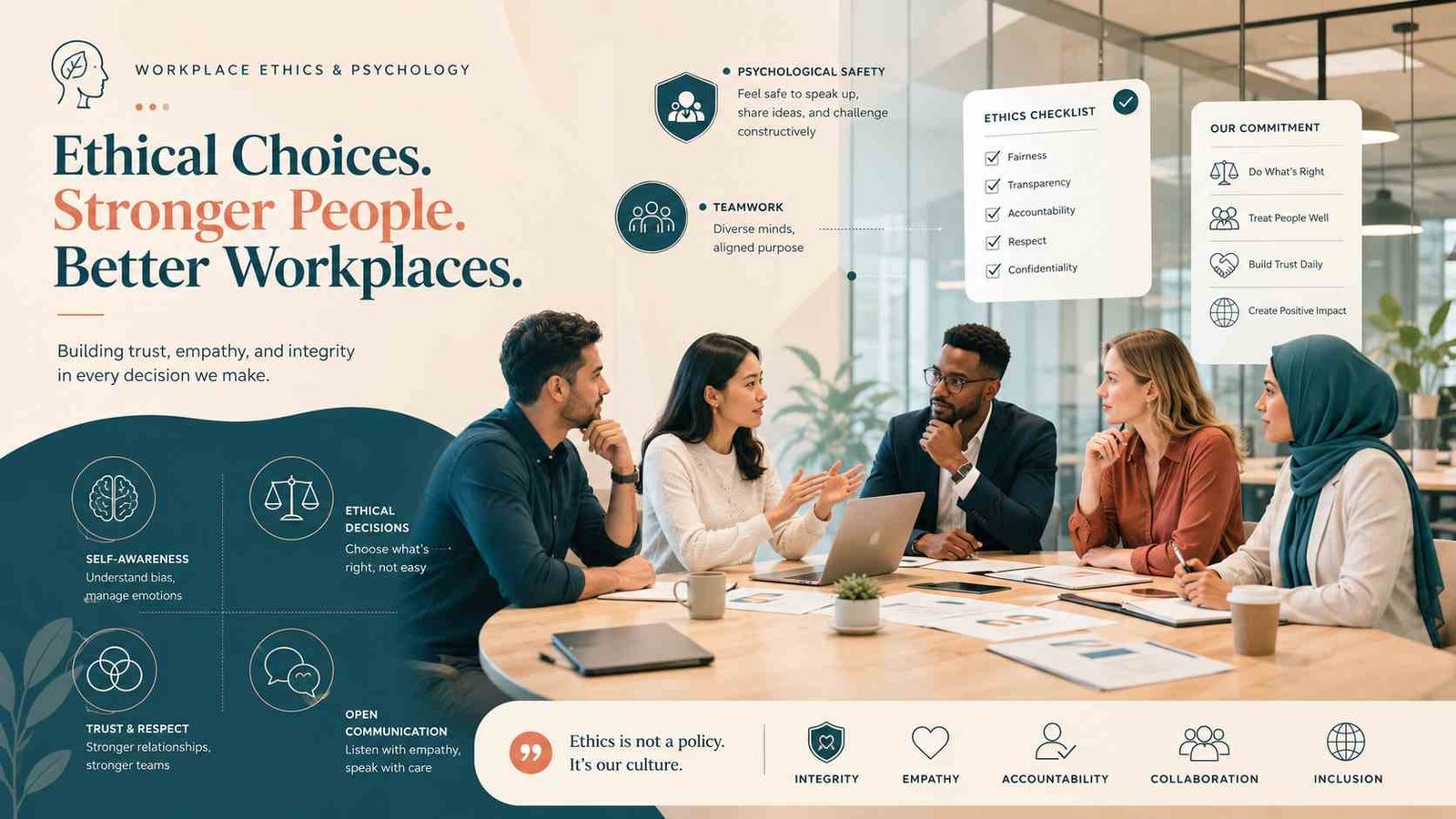 Workplace ethics are often described through policies, company rules, and legal standards. But behind every ethical decision is a human mind shaped by emotions, stress, motivation, leadership, fear, and social influence. This is where psychology becomes important.
A company can create hundreds of compliance policies, but if employees feel unsafe, ignored, overworked, or pressured, ethical problems still appear. Many workplace scandals around the world did not happen because organizations lacked rules. They happened because people worked in environments filled with fear, unhealthy competition, poor leadership, or emotional exhaustion.
Psychology helps organizations understand why people behave the way they do at work. It explains how trust develops, why employees sometimes stay silent about wrongdoing, and how leadership behavior spreads across teams. It also shows why supportive workplaces often perform better ethically than workplaces driven only by punishment and control.
Modern organizations now recognize that ethics and mental well-being are deeply connected. Employees who feel respected, psychologically safe, and emotionally supported are more likely to act responsibly, communicate honestly, and follow ethical standards consistently.
This is why psychology now plays a major role in workplace ethics and compliance across businesses, schools, healthcare systems, government offices, and global organizations.
Understanding Workplace Ethics Through Psychology
Workplace ethics are the moral principles that guide behavior inside an organization. These principles shape how employees treat coworkers, customers, confidential information, and company responsibilities.
Psychology adds an important layer to this discussion because ethical behavior is not only about knowing right from wrong. Human behavior is affected by stress, emotions, group pressure, leadership influence, rewards, and workplace culture.
A worker may understand company rules perfectly yet still make unethical choices under pressure. Another employee may remain silent during misconduct because they fear losing their job or being isolated socially. Psychology helps explain these situations in ways that traditional compliance systems often miss.
What Workplace Ethics Really Mean
Workplace ethics include behaviors and values such as:
- Honesty in communication
- Respect toward coworkers
- Fair treatment of employees
- Accountability for mistakes
- Protection of confidential information
- Professional responsibility
- Equal opportunities without discrimination
For example, a manager who gives promotions fairly demonstrates ethical leadership. An employee who reports incorrect financial records instead of hiding them also shows ethical behavior.
Ethics become part of daily workplace life through small decisions. These choices affect trust, employee morale, teamwork, and long-term organizational reputation.
Why Human Behavior Matters in Compliance
Compliance systems are designed to ensure employees follow laws, policies, and professional standards. However, psychology shows that people do not always act rationally under pressure.
Several psychological factors influence compliance behavior:
| Psychological Factor | Workplace Effect |
|---|---|
| Stress | Increases mistakes and risky decisions |
| Fear | Reduces honesty and open communication |
| Peer pressure | Encourages conformity with group behavior |
| Burnout | Weakens judgment and motivation |
| Lack of trust | Reduces engagement and responsibility |
Research in organizational psychology has repeatedly shown that fear-based workplaces often experience more unethical behavior because employees focus on avoiding punishment instead of doing what is right.
The Connection Between Ethics and Organizational Culture
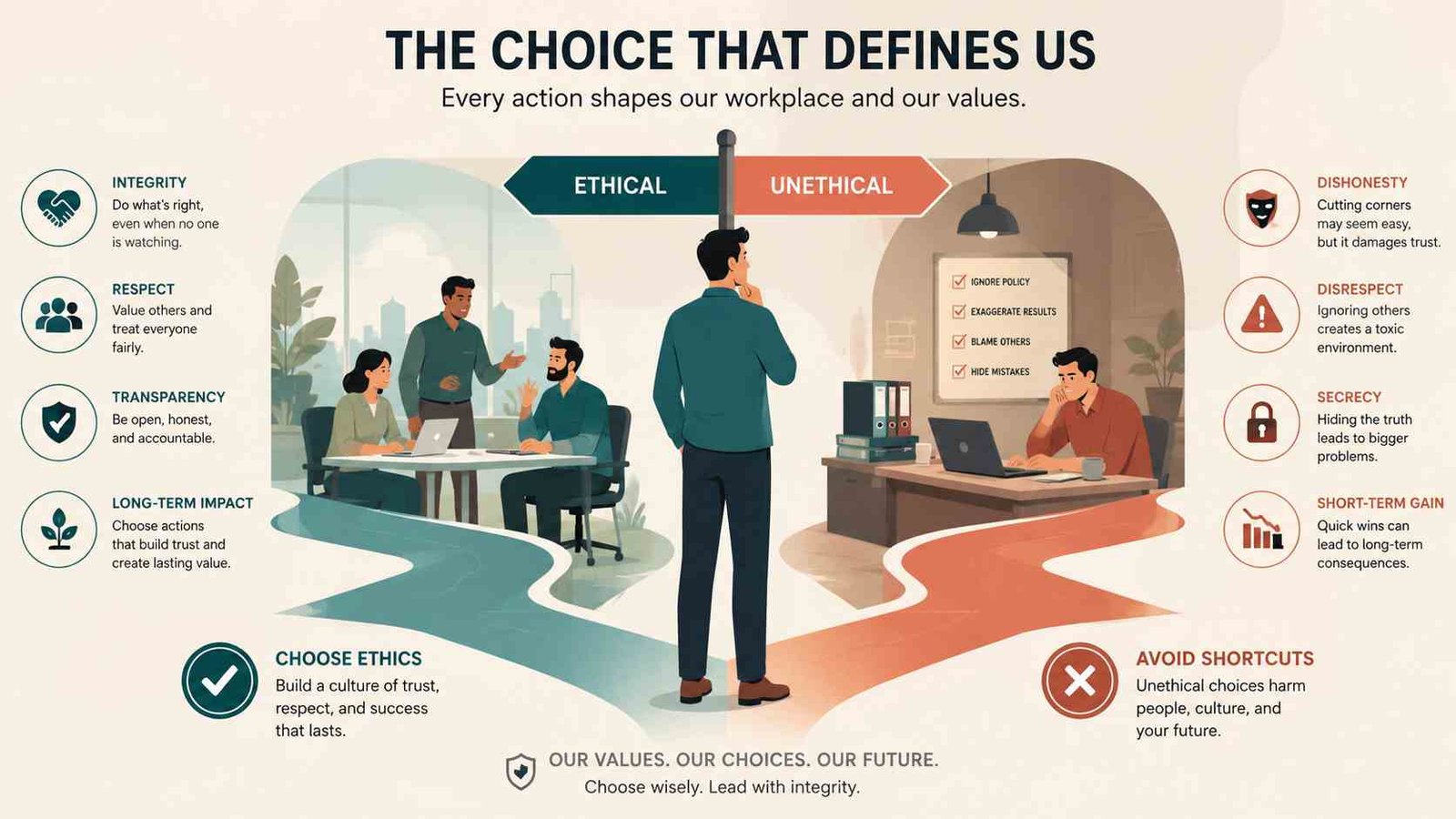
Organizational culture shapes how people behave even when no one is watching.
In healthy workplaces, employees feel safe asking questions, reporting concerns, and admitting mistakes. In toxic environments, workers may hide problems, manipulate information, or stay silent to protect themselves.
For example, if employees constantly see leaders ignoring ethical standards, they may begin to believe dishonest behavior is acceptable. Over time, unethical behavior becomes normalized.
Psychology explains this through social learning theory. People often copy behaviors they observe in authority figures and peer groups. This means workplace culture silently teaches employees what behavior is rewarded or tolerated.
What Is the Role of Psychology in the Workplace?
Psychology helps organizations understand and improve human behavior at work. It supports communication, leadership, teamwork, productivity, emotional well-being, conflict management, and ethical decision-making.
Workplace psychology is now used in hiring systems, leadership training, employee wellness programs, compliance strategies, and organizational development.
Its role is not limited to fixing problems. Psychology also helps create environments where people can perform well while maintaining emotional balance and professional integrity.
Psychology Helps Build Trust
Trust is one of the strongest foundations of ethical workplaces.
Employees who trust their leaders are more likely to:
- Follow workplace policies
- Report unethical behavior
- Communicate honestly
- Cooperate with teams
- Stay committed to organizational goals
Psychology studies how trust develops through fairness, transparency, consistency, and respectful treatment.
When trust disappears, employees often become emotionally disconnected from their work. This may increase dishonesty, disengagement, and workplace conflict.
Emotional Intelligence in Professional Environments
Emotional intelligence refers to the ability to recognize, understand, and manage emotions.
Leaders with emotional intelligence usually communicate more respectfully, handle conflict calmly, and support employees effectively. This improves workplace ethics because emotionally aware leaders create safer and more respectful environments.
Employees with emotional intelligence also tend to:
- Solve conflicts peacefully
- Respect different perspectives
- Handle pressure more responsibly
- Avoid impulsive decisions
- Build healthier workplace relationships
Psychology strongly connects emotional intelligence with ethical leadership and team stability.
Workplace Stress and Ethical Mistakes
Stress affects judgment, memory, patience, and emotional control.
Employees under extreme pressure may:
- Hide mistakes
- Ignore compliance procedures
- Take unethical shortcuts
- Misreport information
- Become aggressive or withdrawn
For example, unrealistic sales targets may push employees toward dishonest behavior simply to avoid punishment or job loss.
This does not excuse unethical behavior, but psychology explains how unhealthy workplace systems increase ethical risks.
The Psychological Factors Behind Ethical and Unethical Behavior
Human behavior is shaped by both internal emotions and external environments. Organizational psychology studies why ethical conflicts happen even among otherwise responsible employees.
Cognitive Dissonance and Ethical Conflict
Cognitive dissonance occurs when people experience discomfort from conflicting beliefs and actions.
For example, an employee may believe honesty is important but still manipulate reports to satisfy management pressure. To reduce guilt, they may justify their behavior by saying:
“Everyone does it.”
“I had no choice.”
“The company expects these numbers.”
Psychology shows that people often create mental justifications to protect their self-image during unethical actions.
Group Pressure and Workplace Conformity
People naturally want social acceptance. In workplaces, this can create dangerous conformity.
Employees may stay silent about unethical behavior because they fear:
- Isolation from coworkers
- Negative evaluations
- Losing promotions
- Conflict with supervisors
Classic psychology studies on conformity demonstrate that people sometimes follow group behavior even when they know it is wrong.
This is why ethical workplace culture matters so much.
Reward Systems and Human Motivation
Organizations sometimes unintentionally encourage unethical behavior through poor reward systems.
Examples include:
- Unrealistic performance targets
- Rewarding results without evaluating methods
- Promoting aggressive competition
- Ignoring emotional burnout
When employees believe success matters more than integrity, ethical behavior often weakens.
Psychology emphasizes that motivation systems must balance achievement with fairness and well-being.
Moral Development and Personal Values
People differ in how they approach moral decisions.
Some employees focus mainly on avoiding punishment. Others think about fairness, social responsibility, or long-term consequences.
Psychologist Lawrence Kohlberg proposed stages of moral development that explain how ethical reasoning becomes more advanced over time.
Organizations benefit when they encourage ethical reflection instead of blind obedience.
What Are the 5 Ethics of Psychology?
Psychology itself follows ethical principles designed to protect people and promote responsible practice. These principles are highly relevant to workplace ethics.
Beneficence and Nonmaleficence
This principle means helping others while avoiding harm.
In workplaces, leaders should create systems that support employee well-being rather than causing emotional or psychological damage.
Examples include preventing bullying, reducing toxic stress, and protecting mental health.
Fidelity and Responsibility
This focuses on trust and accountability.
Managers, HR professionals, and organizations must act responsibly toward employees, clients, and the public.
Employees are also expected to fulfill responsibilities honestly and professionally.
Integrity
Integrity involves honesty, transparency, and truthful communication.
Ethical organizations encourage openness rather than manipulation or deception.
Integrity strengthens employee trust and organizational reputation.
Justice
Justice means fairness and equal treatment.
Psychology emphasizes that all employees deserve respectful treatment regardless of gender, race, religion, age, disability, or cultural background.
Fair hiring, promotion, and evaluation systems are central to workplace ethics.
Respect for People’s Rights and Dignity
This principle protects privacy, cultural respect, personal freedom, and human dignity.
Workplaces should protect employees from discrimination, humiliation, harassment, and emotional abuse.
Modern psychology strongly supports inclusive and psychologically safe environments.
What Are the 3 C’s of Ethics?
Many organizations simplify ethical thinking through the “3 C’s of Ethics.”
Compliance
Compliance means following laws, rules, regulations, and workplace policies.
Without compliance, organizations face legal risks, financial penalties, and reputational damage.
However, psychology reminds us that compliance works best when employees understand the reasons behind rules instead of simply fearing punishment.
Contribution
Contribution focuses on positive involvement within the organization.
Ethical employees contribute by:
- Supporting coworkers
- Communicating honestly
- Protecting workplace culture
- Acting responsibly
Psychology shows that employees who feel valued contribute more positively to teams.
Consequences
Ethical decisions always create consequences.
Psychology helps employees think beyond immediate personal gain and consider the wider impact of actions on coworkers, clients, organizations, and society.
This improves long-term ethical awareness.
What Are the 5 C’s of Psychological Safety?
Psychological safety means employees feel safe expressing ideas, concerns, and mistakes without fear of humiliation or punishment.
This concept has become extremely important in modern workplace psychology.
Clarity
Employees need clear expectations and communication.
Confusion increases anxiety and weakens trust.
Clear communication reduces misunderstandings and ethical errors.
Contribution
People want to feel their ideas matter.
When employees believe their voices are valued, they become more engaged and responsible.
Connection
Strong workplace relationships improve emotional safety.
Employees who feel connected to their teams usually communicate more openly and support ethical culture more effectively.
Courage
Psychological safety gives employees courage to:
- Ask questions
- Admit mistakes
- Report unethical behavior
- Share new ideas
Without courage, silence becomes common.
Commitment
Safe workplaces increase loyalty and commitment.
Employees are more likely to stay motivated and ethical when they feel respected and emotionally secure.
How Leadership Psychology Influences Ethics and Compliance
Leadership behavior shapes organizational ethics more than written policies alone.
Employees closely observe how leaders communicate, react under pressure, and handle responsibility.
Ethical Leadership and Employee Trust
Ethical leaders model honesty, fairness, accountability, and emotional maturity.
When leaders consistently behave ethically, employees often mirror those behaviors.
This creates a culture of trust and stability.
Fear-Based Leadership vs Supportive Leadership
Fear-based leadership may produce short-term obedience but often damages long-term ethics.
Employees in fear-driven environments may:
- Hide mistakes
- Avoid communication
- Experience burnout
- Engage in defensive behavior
Supportive leadership creates healthier psychological conditions where ethical behavior becomes more natural.
Communication Style and Employee Morale
Respectful communication improves morale and emotional safety.
Psychology shows that transparent communication reduces workplace anxiety and increases cooperation.
Employees who feel heard are more likely to remain engaged and ethically responsible.
The Role of Psychological Safety in Modern Organizations
Organizations worldwide are investing heavily in psychological safety because it affects innovation, retention, teamwork, and ethical behavior.
Employees Speak Up More in Safe Environments
Employees are more willing to report misconduct or suggest improvements when they feel protected from retaliation.
This helps organizations identify problems earlier.
Mental Health and Ethical Decision-Making
Mental exhaustion affects concentration, emotional control, and judgment.
Workers struggling with anxiety, burnout, or chronic stress may have difficulty maintaining consistent ethical behavior.
Supporting mental health improves both well-being and workplace ethics.
Diversity, Inclusion, and Respect
Inclusive workplaces reduce discrimination and social isolation.
Psychology shows that belonging and respect strengthen employee engagement and trust.
Organizations with inclusive cultures often experience stronger collaboration and ethical accountability.
Common Workplace Ethics Problems Explained Through Psychology
Many workplace ethics problems are deeply connected to psychological dynamics.
Workplace Bullying
Bullying often develops through power imbalance, insecurity, poor leadership, or unhealthy competition.
Victims may experience anxiety, depression, emotional exhaustion, and reduced confidence.
Discrimination and Bias
Unconscious bias affects hiring, promotions, communication, and teamwork.
Psychology studies how stereotypes influence behavior without people fully realizing it.
Awareness training helps reduce these patterns.
Corruption and Dishonesty
Corruption rarely begins suddenly.
It often grows slowly when unethical actions become normalized or rewarded.
Psychology explains how repeated exposure to unethical environments weakens moral sensitivity over time.
Lack of Accountability
Employees who feel powerless or disconnected may stop taking responsibility.
This can create learned helplessness, where workers believe their actions no longer matter.
Healthy workplaces encourage accountability through support rather than fear alone.
How Organizations Can Improve Ethics Using Psychology
Organizations can strengthen ethics by focusing on human behavior instead of relying only on punishment systems.
Ethical Training Programs
Ethics training should include real workplace situations, emotional awareness, and decision-making exercises.
Employees learn better when training feels practical and relatable.
Mental Health Support at Work
Mental health support improves emotional resilience and ethical judgment.
Helpful strategies include:
- Employee counseling
- Stress management workshops
- Flexible work systems
- Supportive supervision
Fair Reward Systems
Employees should feel that fairness matters more than unhealthy competition.
Balanced reward systems reduce pressure-driven unethical behavior.
Building Open Communication Channels
Employees need safe ways to report concerns without fear.
Anonymous reporting systems, supportive HR teams, and emotionally intelligent leadership improve organizational trust.
| Healthy Ethical Workplace | Unhealthy Ethical Workplace |
|---|---|
| Open communication | Fear-based silence |
| Fair leadership | Favoritism |
| Psychological safety | Emotional intimidation |
| Transparent policies | Hidden agendas |
| Mental health support | Burnout culture |
The Future of Workplace Ethics and Organizational Psychology
The future of workplace ethics will increasingly depend on psychological understanding.
Remote work, digital communication, AI monitoring systems, and global workforce diversity are changing how organizations operate.
Ethics in Remote Work Environments
Remote work creates challenges involving trust, isolation, and communication clarity.
Organizations must support emotional connection even in digital environments.
AI and Employee Monitoring Concerns
Some companies now use AI tools to monitor productivity and behavior.
Psychology warns that excessive monitoring may increase anxiety, reduce trust, and damage morale.
Ethical technology policies will become more important in future workplaces.
Younger Generations and Ethical Expectations
Younger employees often expect workplaces to prioritize:
- Mental health
- Inclusion
- Transparency
- Work-life balance
- Social responsibility
Organizations ignoring these expectations may struggle with retention and trust.
Why Psychology Is Essential for Ethical Workplaces
Ethical workplaces are built through human understanding, not rules alone.
Psychology helps organizations understand how emotions, leadership, stress, trust, motivation, and social influence shape workplace behavior every day.
When employees feel psychologically safe, emotionally respected, and fairly treated, they are more likely to communicate honestly, follow ethical standards, and contribute positively to organizational culture.
Workplace ethics become stronger when organizations focus not only on compliance systems but also on the people behind those systems.
That is the true role of psychology in workplace ethics and compliance.

M.Phil in Psychology from UET Lahore, Sajid Ali shares clear, research-based insights on mental health, emotions, and social behavior in simple English. Sajid Ali draws on hands-on academic research and real-life observations of emotional and social behavior, turning psychological theory into clear, practical insight for everyday readers.